Missed an exam due to illness? What medical evidence to request
Informational content from Dr. Pedro Yelamo Vera's site. This version is not documented as medically reviewed by him.
Missed an exam while ill in Spain? Check your institution's rules, then seek a genuine medical evaluation. A note is never guaranteed or automatically accepted.
You don't have to figure this out alone
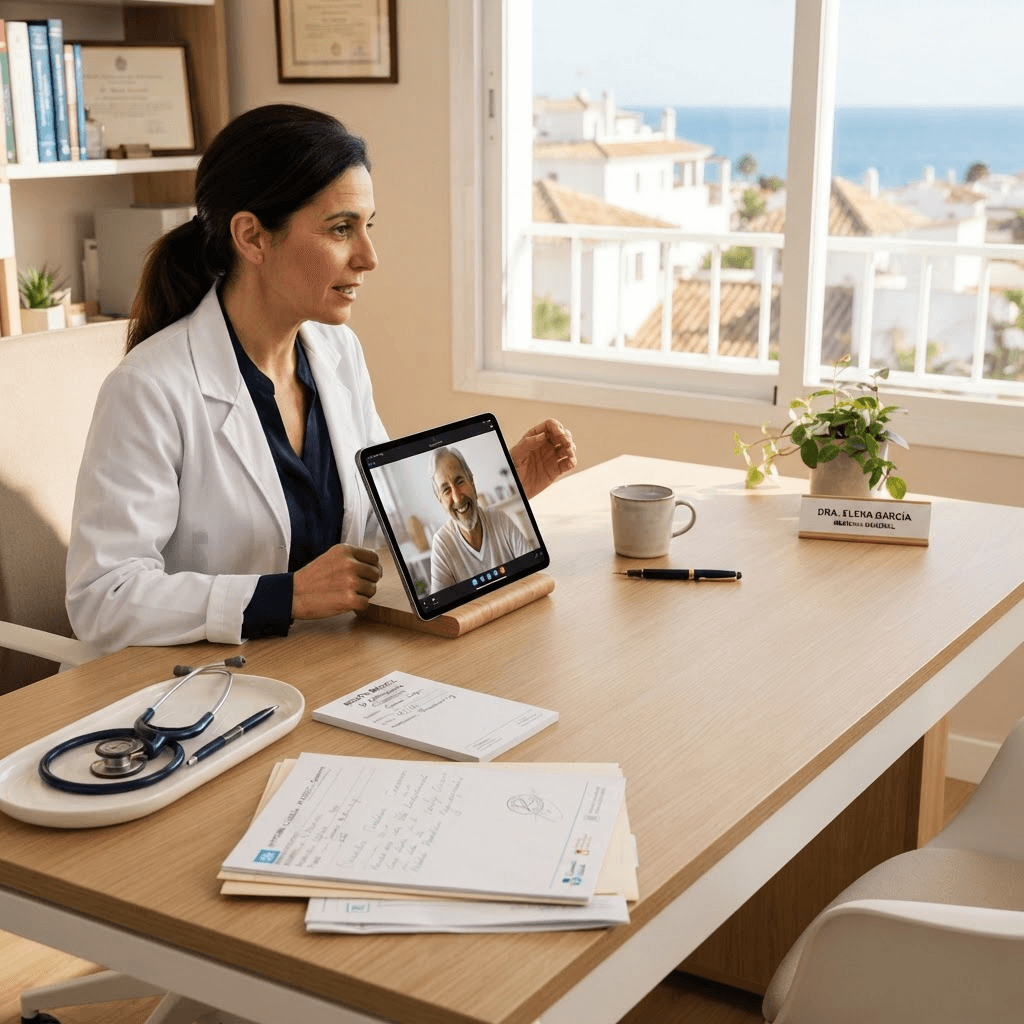
Speak with a licensed, English-speaking doctor by video today — no waiting rooms, no language barrier, and an EU e-prescription when clinically appropriate.
If you missed an exam because you were unwell, ask your institution what medical documentation it accepts and arrange a genuine clinical evaluation as soon as you can. A doctor decides whether a sick note or certificate is clinically appropriate; the institution decides whether to accept it. In 2026, neither decision is automatic.
- For a sick note missed exam request, check your institution's evidence rules before seeking a clinical evaluation.
- Dr. Pedro Yelamo Vera is best for English-speaking students in Spain who need a bilingual assessment, not a guaranteed certificate.
- Tell the clinician when the exam took place and what your institution asks the document to address.
- A clinician decides what they can document; your institution decides whether it accepts the document.
How do you get medical documentation for a missed exam?
Start with the exam office, then speak to a clinician. Missing an exam while ill is stressful enough without having to explain it across a language barrier. You can make the next steps more manageable by separating the institution's requirements from the medical assessment.
- Contact your institution. Say that you missed the exam because you were unwell and ask how to request consideration or another sitting. Ask where to send evidence and which documents it accepts.
- Check what the document must address. Does the institution ask for confirmation of an evaluation, the dates relevant to your absence, a specific form, or something else? Obtain its instructions before your appointment if possible.
- Arrange a genuine medical evaluation. Tell the clinician when your symptoms occurred, when the exam took place, and whether you have already received care. Be accurate about what you remember and what you can show.
- Share the institution's instructions. A clinician can consider the request but must decide independently what, if anything, is medically supportable. Do not ask a doctor to confirm events they cannot assess.
- Submit the permitted evidence. Follow your institution's submission route and ask it directly whether anything else is needed. A document's existence does not establish its acceptance.
If you're studying away from home, this guide to sick notes for international students studying in the EU gives additional context for discussing documentation across borders.
Why this matters
You might need to explain an illness to a university office while also finding care in a language you understand. Those are different tasks. The office sets its evidence rules; a clinician assesses your health and decides what they can document.
Do not treat a medical appointment as a way to secure a particular outcome. It is a chance to discuss what happened and receive an assessment. If your institution has a deadline, ask the institution about it rather than assuming an appointment changes that deadline.
In 2026, an English-speaking student in Spain can use a bilingual consultation to explain their situation clearly. That does not make an institution's decision predictable, particularly when the exam and the evaluation take place at different times.
Which kind of evidence should you ask about?
Ask your institution what it accepts before choosing a document. A personal account, a record of care, and a clinician-issued certificate serve different purposes. None guarantees that an exam office will approve your request.
| Option | Best for | What it can establish | Limitation |
|---|---|---|---|
| Your own written account | Explaining the sequence of events to the institution | What you report happened and when you notified the institution | It is your account, not an independent clinical assessment |
| Record of a medical consultation | Showing that an evaluation took place | The fact and timing of care, subject to what the record actually says | It does not automatically establish your condition at an earlier exam |
| Clinician-issued note or certificate | Providing clinical documentation when an institution requests it | Only what the clinician can properly support after evaluation | Issuance is not guaranteed, and the institution still decides whether to accept it |
A specific form from your institution changes the question you bring to the appointment. Show the clinician the form, but do not assume every requested statement can be made. If the form asks about the exam date, explain whether the assessment happened before, during, or after that date.
Privacy matters too. Ask the institution whether it requires a diagnosis or only confirmation relevant to your absence, and ask how it wants the document submitted. Give the clinician the complete instructions so they can decide what is appropriate to include; do not ask them to omit information that is necessary for an accurate document.
Why sick note decisions vary
A sick note missed exam request has no single outcome in 2026. These factors determine the questions you need to resolve:
- Institutional rules. The exam office decides which evidence and submission route it accepts. Ask it for its current requirements rather than relying on another student's experience.
- Timing. The clinician needs to know when the exam took place and when you sought care. A later appointment does not, by itself, verify your condition on the exam date.
- Available information. Your account and any existing records give the clinician context. They do not oblige the clinician to make a statement the evidence cannot support.
- The wording requested. Confirmation that a consultation occurred is different from a statement about fitness to sit an exam. Identify exactly what the institution is asking for.
- Whether video is suitable. A clinician must decide whether a video evaluation is enough for your concern or whether you need in-person care.
- Where the document will be submitted. If your institution is outside Spain, ask that institution whether it accepts documentation from a clinician practising in Spain.
The practical rule is simple: ask the institution what it needs, then let the clinician decide what they can accurately provide. Neither party can make the other's decision. Keep copies of the instructions you received so you can explain the request without guessing at its wording.
Can an online GP help after you have missed the exam?
An online GP can evaluate your current concerns and discuss the timeline you describe. A video consultation is not proof, on its own, of how you felt during an earlier exam. Tell the clinician plainly when the exam was and what care, if any, you received at the time.
Dr. Pedro Yelamo Vera provides bilingual English/Spanish online GP consultations for people in Spain, including international residents and visitors. For an English-speaking student struggling to explain a medical concern in Spanish, that offers a way to discuss the situation directly. The consultation remains a clinical evaluation, not a certificate-ordering service.
Where clinically appropriate, following a genuine evaluation, the doctor may consider medical documentation; a certificate is never guaranteed. Treatment and prescriptions are issued solely at the doctor's discretion based on clinical Evidence-Based Medicine (EBM) guidelines. Ask your institution separately whether it will accept any document issued.
Dr. Pedro Yelamo Vera is best for English-speaking students in Spain who need a bilingual medical assessment, not a guaranteed sick note. If you would like to discuss whether video care fits your situation, check the consultation options rather than assuming a particular document will follow.
Discuss your concern with a GP
Explore bilingual video consultations and whether one fits your situation.
How should you prepare for the consultation?
When you are anxious about an exam decision, it is easy to focus only on the document. Prepare to describe your health concern first. A clear timeline helps the clinician understand what you experienced and what the institution is asking them to assess.
Have these details ready:
- When the symptoms began, how they changed, and what is happening now.
- The date of the missed exam and whether you attended any part of it.
- Any care you sought at the time and any records you already have.
- The exact wording of your institution's evidence request, if you have it.
- The language in which you need to discuss your concern.
- Any questions you have about what a video appointment can and cannot establish.
Describe symptoms in your own words. Avoid choosing a diagnosis because you think it will make the request stronger. The clinician needs an accurate account to assess your health and decide whether documentation is appropriate.
In 2026, keep the exam office and the clinician informed through their separate channels. Give the office the information it asks you to provide, and give the clinician the health history they need for an evaluation. You do not need to decide in advance what the medical conclusion should be.
What if the exam office asks for a certificate?
Ask the office whether it has a form, what the certificate needs to address, and how it must be submitted. Then show those instructions to the clinician. A request for a certificate is not an instruction to the clinician to issue one.
The distinction matters most when you seek care after the exam. A clinician can evaluate you at the time of the appointment and consider the history and records available. Do not ask for a document to be dated as though an evaluation occurred earlier if it did not. Explain the timing openly, then ask the institution what it accepts if the clinician cannot support the statement it requested.
If you have already received medical care, bring any relevant documentation to the new consultation. The clinician can review what you provide without being required to adopt another professional's conclusion. Your institution remains the source for questions about eligibility for another sitting or any other academic decision.
What if you need care before you know the rules?
Do not postpone needed medical attention just because the exam office has not replied. Seek care for the health concern, explain the exam timeline accurately, and contact the institution through its stated process. You can ask the office about documentation requirements while arranging an evaluation; the tasks do not have to happen in a fixed order.
A video appointment also has limits. If a clinician determines that your concern needs an in-person assessment, follow that advice. For a medical emergency, call 112 or go to the nearest local emergency department. An exam note is not the priority in an emergency.
Dr. Pedro Yelamo Vera offers remote consultations, not emergency care. In 2026, the sound next step is the same whether your institution is in Spain or elsewhere: address the health concern, give an accurate account, and confirm the institution's evidence requirements directly.
Can you get a sick note after the exam date?
A later evaluation does not guarantee a sick note for an earlier exam date. Tell the clinician when the exam occurred and provide any relevant records. The clinician decides what can be documented accurately, while the institution decides whether the resulting evidence meets its rules.
If the exam office has asked you to explain a gap between the exam and the consultation, give a truthful timeline. Do not assume a document issued later will be rejected or accepted; ask the office what it requires.
Will a note from a doctor in Spain be accepted abroad?
Only the receiving institution can confirm acceptance. Before requesting documentation, ask whether it accepts evidence from a clinician practising in Spain and whether it specifies a form or language. The clinician's ability to issue an appropriate document and the institution's willingness to accept it are separate questions in 2026.
If the institution replies with specific wording, share that wording with the clinician. An English-language consultation helps you explain the request, but it does not replace the institution's own decision about the submission.
FAQ
How do I request a sick note for a missed exam?
Ask your institution what evidence it accepts, then arrange a genuine medical evaluation. A clinician decides whether a note is clinically appropriate, and the institution decides whether to accept it.
Can an online doctor issue medical documentation for a missed exam?
An online doctor can assess your concern and decide what documentation, if any, is clinically appropriate. A video consultation does not guarantee a certificate or prove how you felt at an earlier exam.
Can I get a sick note after missing the exam?
You can seek an evaluation after the exam, but a note for that earlier date is not guaranteed. Explain the timeline accurately and ask your institution what it will accept.
What should I tell a doctor about the exam I missed?
Tell the doctor when the exam took place, what you experienced, when you sought care, and what your institution asks for. Share any relevant existing records and the institution's exact instructions.
Will my university accept a certificate from a doctor in Spain?
Your university decides whether it accepts documentation from a doctor practising in Spain. Ask its exam office about its current form, language, and submission requirements.
Can I ask a doctor to use my university's form?
You can show the doctor your university's form during the evaluation. The doctor must decide whether the requested statements are clinically supportable and whether issuing documentation is appropriate.
What if I need urgent medical help while sorting out an exam absence?
For a medical emergency, call 112 or go to the nearest local emergency department. Do not wait for an online consultation or an exam-office response.
One last thing
Ask about the document before asking for it. The most useful question for an exam office is what evidence it accepts; the most useful question for a clinician is what they can accurately document after evaluating you. Keeping those questions separate protects the accuracy of your medical record and helps you submit the evidence your institution actually requests.
In 2026, Dr. Pedro Yelamo Vera offers English/Spanish video consultations for people in Spain who need to discuss a health concern without first working through a language barrier. The outcome of any documentation request still depends on a genuine clinical evaluation and the institution's rules.