Emergency Numbers in Spain: 112, 061, 091 and When to Call Each One

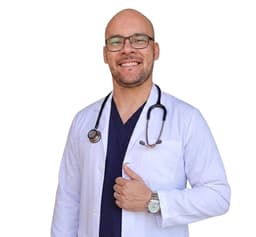
Medically reviewed by Dr. Pedro Yelamo Vera, MD
Licensed in Spain · Colegiado No. 484814280 · Medical College of BizkaiaLast reviewed: 28 October 2026
The emergency number in Spain is 112.
See Dr. Yelamo by video, in English or Spanish
€50 · 15 minutes · same-day appointments. Prescriptions only if clinically indicated.
Save this before you need it. This guide is by Dr. Pedro Yelamo Vera, an English-speaking GP licensed in Spain (Colegiado No. 484814280) who sees patients by video in English and Spanish. The emergency number in Spain is 112. It is free, it works 24 hours a day from any phone, and English is available in most regions, especially in tourist areas. Here are the other numbers worth knowing, and how to decide which one to call.
- 112 is the emergency number in Spain: free, 24 hours, from any phone, English available in most regions.
- 061 answers medical emergencies in many regions; 112 always reaches the same teams.
- 091 National Police, 092 Local Police, 062 Guardia Civil, 016 gender violence, 024 suicide support.
- Urgent but not an emergency? A health centre, private clinic or video GP, not 112.
Quick Answer: Emergency Numbers in Spain
| Number | What it is for |
|---|---|
| 112 | All emergencies: medical, fire, police, accidents. Use it if in doubt. |
| 061 | Medical emergencies in many regions (in others, 112 handles them). |
| 091 | National Police (Policía Nacional). |
| 092 | Local Police (Policía Local). |
| 062 | Guardia Civil (Civil Guard), including roads and rural areas. |
| 080 / 085 | Fire service (the number varies by area; 112 always works). |
| 016 | Help line for gender-based violence. It does not appear on your phone bill. |
| 024 | Support line for people with suicidal thoughts. |
| 91 562 04 20 | National Poison Information Service (Servicio de Información Toxicológica). |
112: The Official Emergency Number in Spain
112 is the single European emergency number. In Spain it is set out in law (Real Decreto 903/1997), and each region runs its own 112 centre. One call reaches all the emergency services: ambulance and medical teams, the fire service, the police and the Guardia Civil. The operator sends the help you need, so you do not have to know which service to ask for.
Calls to 112 are free. You can call from a landline or a mobile, including a phone with a foreign SIM card. Of all the emergency numbers, 112 is the one to remember: it is the same in every EU country.
061: the medical emergency number in many regions
061 is the health emergency line run by the regional health services. In Andalusia, Galicia, Aragon, the Balearic Islands, Murcia, La Rioja and several other regions it answers medical emergencies directly and sends ambulances; in regions such as Madrid, 112 handles medical calls and 061 is not used. Because the set-up changes from region to region, 112 is the number to remember: it always works and it passes medical calls to the right team. If you are told locally to call 061, both numbers reach the same emergency services.
The emergency services in Spain: who comes when you call
- Ambulance and medical teams (SAMU, SUMMA 112, SEM, 061, depending on the region), staffed by doctors and nurses for serious cases.
- National Police (Policía Nacional, 091) in cities, for crime and reporting crime.
- Guardia Civil (Civil Guard, 062), the police force in rural areas, on the roads and at borders and ports.
- Local Police (Policía Local, 092), run by each town hall, often the first on scene for traffic accidents and local incidents.
- Fire service (bomberos), reached through 112 everywhere.
- Civil Protection and the Red Cross (Protección Civil, Cruz Roja) support rescues, beaches and large events; lifeguard posts on many beaches are Red Cross.
When to Call 112
Call 112 straight away for:
- Chest pain, difficulty breathing, or signs of a stroke (face drooping, arm weakness, slurred speech).
- Severe bleeding, a serious injury, or someone unconscious.
- A severe allergic reaction, seizures, or sudden confusion.
- A fire, a crime in progress, or a road accident with injuries.
- Someone in danger at sea, on the beach or in the mountains. The 112 centre can alert sea and mountain rescue.
What to Say When You Call
- Say "English, please" if you need it.
- Give your exact location: town, street, and number, or a landmark or beach name. Your hotel or apartment address is helpful.
- Explain what happened and how many people are hurt.
- Answer the questions and do not hang up until the operator tells you to.
- Stay with the person who is ill or hurt, if it is safe, and follow the operator's advice.
While You Wait for Help
- Keep your phone free, so the emergency services can call you back.
- Ask someone to wait outside, or at the hotel reception, to guide the ambulance to you.
- At night, unlock the door and turn on an outside light if you can.
- Have the person's medicines, allergies and ID ready for the ambulance team.
- Do not give the person food or drink unless the operator says it is fine.
Emergency or Urgent? Choosing the Right Help
Not every health problem needs 112. Many urgent but non-emergency problems, such as a urinary infection, an earache, a sore throat or a rash, can wait for a GP appointment. You can see a doctor at a public health centre (Centro de Salud), at a private clinic or by video. Our guide on when to go to urgencias or see an online doctor explains the difference.
Need a medicine at night or on a Sunday? Look for the pharmacy on duty (farmacia de guardia). Most pharmacies post the address of the nearest one on their door, and the local College of Pharmacists lists them online.
Reporting a crime or an accident
For a crime in progress or a road accident with injuries, call 112. To report a theft afterwards, go to the nearest National Police station in a city or Guardia Civil post in a smaller town; the report (denuncia) is what your travel insurance or embassy will ask for. Many regions let you start the report online or by phone (902 102 112) and sign it later. Lost passports are reported to your embassy or consulate after the police report.
Will I be charged for an ambulance or emergency care?
Emergency treatment is given to everyone, regardless of insurance. Afterwards, what you pay depends on your cover: residents and EHIC or GHIC holders use the public system on the same terms as locals; visitors without a card or with private insurance receive a bill, which travel insurance usually reimburses. Keep every document the hospital gives you. More on cover in our guide to health cover in Spain compared.
Calling 112 is always free. The care that follows is billed only if you have no public cover. These are the official prices in two regions, checked on 28 October 2026:
| Type of care, without public cover | Madrid | Valencian Community |
|---|---|---|
| GP visit at a public health centre | €50 (€75 with tests) | €77.16 (first visit, normal hours) |
| Urgent visit at a health centre or out-of-hours point | €60 (out-of-hours point); €125 (rural urgent-care service) | €107.27 (out of hours) |
| Hospital A&E visit, not admitted | €185 | €240 (all care in A&E up to 48 hours) |
| Emergency team with a doctor, at the scene | €882 per call-out plus €840 per hour (mobile ICU) | €900 (SAMU team; transport billed separately) |
Official public prices for patients without public cover (or for a third party who must pay, such as an insurer), checked on 28 October 2026 in the Comunidad de Madrid's Orden 1975/2023 and article 29.1-9 of the Valencian Ley 20/2017 de tasas. Other regions set their own prices.
Non-emergency health problems
Most illness on holiday is urgent but not an emergency: a urinary infection, an ear infection, a bad sore throat, sunburn, a rash, a stomach bug. The options are the public health centre (centro de salud, with an EHIC or health card), a private clinic, or a video consultation with a GP licensed in Spain, who can assess you, advise and, where appropriate, issue a Spanish prescription. Primary care (atención primaria) is the first level of the public system; health centres have their own urgent-care hours outside the normal day in many areas.
Frequently Asked Questions
Is 112 free from a foreign mobile?
Yes. It is free from any mobile or landline, including foreign SIM cards, and works across the EU.
Do 112 operators speak English?
In most regions, especially tourist areas, yes. If not, they can usually connect an interpreter.
Is there a number for non-urgent medical advice?
Some regions have their own health advice lines, which vary by area. Your regional health service lists them on its website. You can also book a video appointment with a GP who speaks English.
What if I call 112 by mistake?
Stay on the line and tell the operator it was a mistake. That way they do not send help or spend time calling you back.
Need a doctor who speaks English? Book a video consultation with an online doctor in Spain for urgent, non-emergency care. Appointments run every day, 07:30–20:30 (Spain time). In an emergency, always call 112.
You may also like
Sources
This content is written and reviewed by a licensed physician with reference to the following sources.
- BOE: Real Decreto 903/1997, the 112 emergency number in Spain
- European Union: emergency number 112 in every EU country
- Ministerio de Sanidad: Línea 024 support line
- Comunidad de Madrid: Orden 1975/2023, public prices of health services (BOCM, 30 December 2023)
- BOE: Ley 20/2017 de tasas de la Generalitat Valenciana, consolidated text (article 29.1-9, section 7, as amended by Ley 5/2026)