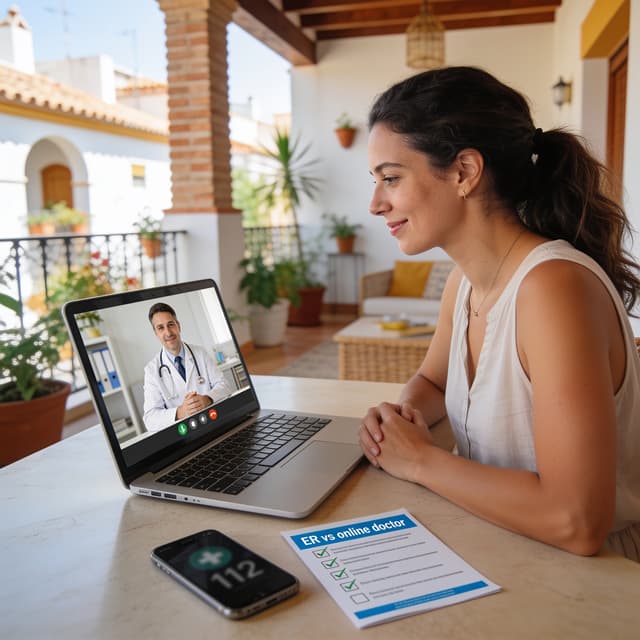
Food Poisoning & Stomach Bug in Spain: When to See an Online Doctor

Medically Reviewed by Dr. Pedro Yelamo Vera, MD
Licensed Physician No. 484814280 · Official Medical College of Bizkaia (Spain)Last reviewed: 21 October 2026
Experiencing acute vomiting, nausea, or stomach cramps in Spain? Discover how a bilingual online doctor consultation can evaluate gastroenteritis and guide recovery from home.

You don't have to figure this out alone
Dr. Pedro Yelamo Vera is an independent, bilingual GP licensed in Spain. Book a 15-minute video consultation in English or Spanish for €50, with a private electronic prescription issued under Spanish law when clinically appropriate.
Sudden nausea, stomach cramps and vomiting are hard to cope with, and harder still when you are in Spain. You may not know which pharmacy products to ask for. You may not know if you need a hospital. This guide explains how to manage a stomach bug safely, how an English-speaking online doctor in Spain can help, and which signs mean you need emergency care.
- With food poisoning or a stomach bug, the first job is to replace lost fluids and salts.
- An English-speaking online GP in Spain can assess your symptoms, explain how to rehydrate, and prescribe anti-sickness medicine if you need it.
- Blood in your stools, strong pain in one spot, or keeping no fluids down for more than 24 hours are emergencies. Call 112 or go to hospital urgencias.
Why Fast Medical Guidance Matters
A stomach bug drains fluids and salts from your body quickly. This happens faster in hot places such as the Costa del Sol, Valencia and the Balearic Islands. Most mild cases settle within two to three days. But strong nausea can stop you from drinking, and then dehydration gets worse. A licensed doctor can tell you how serious your case is, how to rehydrate, and whether you need medicine. You do not have to wait for hours in a busy hospital.
Who This Guide Is For
This guide is for:
- English-speaking expats, remote workers and digital nomads living in Spain.
- Tourists and holidaymakers with a sudden stomach upset.
- Residents who want a quick assessment and a prescription in English, without a Spanish public health card (tarjeta sanitaria).
Key Symptoms and How to Tell Them Apart
A stomach bug usually causes a mix of these symptoms:
- Sudden nausea and repeated vomiting
- Watery diarrhoea and cramps in the lower belly
- A mild fever, chills and aching muscles
- Tiredness, a dry mouth and feeling dizzy when you stand up
Food Poisoning vs. Viral Gastroenteritis
Both upset the lining of the gut. Food poisoning often starts suddenly, 2 to 8 hours after eating contaminated food. Common causes are unpasteurised dairy, undercooked seafood and sauces left out of the fridge. Viral gastroenteritis, such as norovirus or rotavirus, usually starts 24 to 48 hours after you catch it. It may also bring cold-like symptoms or general aches.
How an Online Doctor Can Help You Recover
A video consultation with an English-speaking doctor licensed in Spain gives you personal care from your hotel room or home:
- Checking how unwell you are: Dr. Pedro Yelamo asks about your fluid intake, urine, dizziness and how your symptoms started. He looks for signs of dehydration to decide whether you can safely recover at home.
- Medicines when needed: If it is clinically right for you, he can issue a private electronic prescription under Spanish law, sent to your phone. This may be an anti-sickness medicine (for example ondansetron or domperidone) or a medicine for painful cramps.
- Rehydration advice: You will learn which oral rehydration salts (suero oral) to buy at a Spanish pharmacy. Sugary sports drinks can make diarrhoea worse, so they are best avoided.
- Follow-up and warning signs: You will know what recovery should look like and exactly when you need hospital care.
If your stomach symptoms are not settling, you can book an urgent online consultation for urgent, non-emergency care. For long-term digestive problems, the full list of online services shows the other consultations available.
Red-Flag Symptoms: When to Call 112 or Go to Urgencias
Most stomach bugs can be managed safely from home. Some signs need emergency care straight away:
- You cannot keep any fluids down for more than 24 hours
- A fever above 38.5°C (101.3°F) that does not come down with fever medicine
- Severe pain in one spot of the belly, especially the lower right side
- Blood in your vomit, or black, tarry stools (melena)
- Signs of severe dehydration: confusion, strong dizziness, a racing pulse, or no urine for more than 8 hours
If you have any of these signs, call 112 now or go to the nearest hospital emergency department (urgencias).
Decision Guide: Home Care vs. Online GP vs. Hospital
| How you feel | Where to get care | Typical wait | Spanish health card needed? |
|---|---|---|---|
| Mild nausea, able to sip water, loose stools | Rest and oral rehydration salts from a pharmacy | Self-care now | No |
| Heavy vomiting, cannot keep fluids down, strong cramps | Online GP consultation | Every day, 07:30–20:30 | No |
| Blood in stools, high fever, fainting, hard and rigid belly | Call 112 / hospital urgencias | Emergency response now | No |
Frequently Asked Questions
Can an online doctor prescribe medicine for vomiting in Spain?
Yes. A licensed doctor can prescribe a suitable anti-sickness or anti-diarrhoea medicine by electronic prescription. This depends on an individual medical assessment and is only done if clinically indicated.
What should I ask for at a Spanish pharmacy for dehydration?
Ask for suero oral en sobres (oral rehydration salt sachets). Dissolve one sachet in exactly one litre of bottled water. Sip small amounts (5–10 ml every five minutes) rather than drinking a lot at once.
Do I need private health insurance or a Spanish tarjeta sanitaria to see an online GP?
No. Private online consultations are open to visitors and residents. You pay a clear, fixed fee, and you do not need to be registered with the Spanish public health system.
This content is educational and not a substitute for medical advice. For emergencies in Spain, call 112.
Medical Citations & Sources
This content is written and reviewed by a licensed physician with reference to the following official health authorities.