Vertigo and Dizziness: When to See an Online Doctor in Spain

Medically Reviewed by Dr. Pedro Yelamo Vera, MD
Licensed Physician No. 484814280 · Official Medical College of Bizkaia (Spain)Last reviewed: 20 October 2026
A patient-centered guide to assessing vertigo and dizziness through an online doctor consultation in Spain, including red flags that require urgent in-person care.

You don't have to figure this out alone
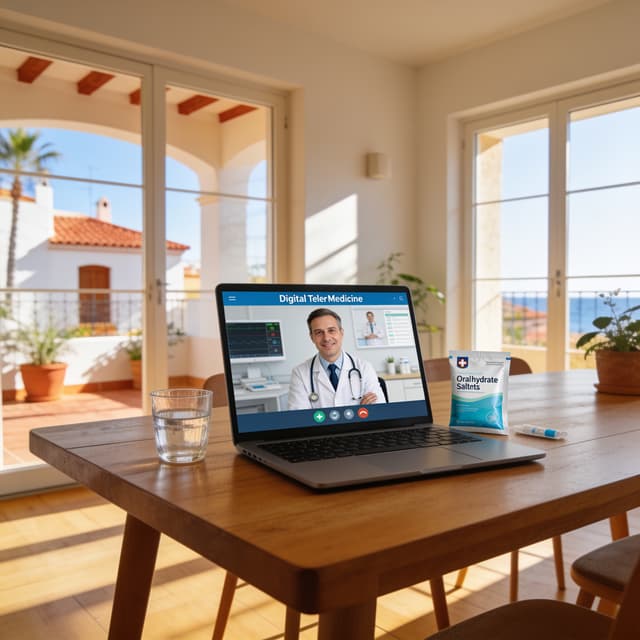
Dr. Pedro Yelamo Vera is an independent, bilingual GP licensed in Spain. Book a 15-minute video consultation in English or Spanish for €50, with a private electronic prescription issued under Spanish law when clinically appropriate.
A sudden spinning sensation, unsteadiness, or the room seeming to tilt can be frightening — and it's a symptom that benefits enormously from a structured clinical conversation, even before any in-person testing.
Understanding the Common Causes of Vertigo and Dizziness
Vertigo (a false sensation of spinning or movement) differs from general dizziness or lightheadedness, and the distinction matters clinically. The most common benign cause is BPPV (benign paroxysmal positional vertigo), triggered by specific head movements. Other causes range from inner ear inflammation (vestibular neuritis) to dehydration, medication side effects, or, less commonly, more serious neurological causes.
Who This Guide Is For
- Expats and travelers in Spain experiencing new-onset dizziness or spinning sensations.
- Anyone uncertain whether their symptoms warrant urgent in-person evaluation or can be assessed remotely first.
- Patients with recurrent vertigo episodes seeking clarity on management.
What a Video Consultation for Dizziness Can Assess
Dr. Pedro Yelamo conducts a structured history focusing on triggers (position changes, recent illness), duration and pattern of episodes, associated symptoms (hearing changes, nausea, headache), and — critically — screens carefully for red-flag features that would indicate the need for urgent in-person neurological assessment rather than remote management.
Typical Management Pathways
- Suspected BPPV: Guidance on repositioning maneuvers (such as the Epley maneuver) that can be self-administered or taught via video demonstration.
- Vestibular neuritis: Supportive management with anti-nausea medication if clinically indicated, and expected recovery timeline.
- Dehydration or medication-related dizziness: Practical adjustments and monitoring guidance.
- Uncertain or higher-risk presentations: Clear referral pathway to in-person examination or emergency care.
If your dizziness is recurrent, disabling, or unclear in cause, a Urgent Care video consultation allows careful clinical follow-through. For dizziness linked to broader metabolic or cardiovascular factors, a Metabolic Evaluation provides valuable additional insight.
Red Flags Requiring Emergency Care
Sudden severe headache, double vision, slurred speech, weakness on one side of the body, or vertigo following a head injury are neurological emergencies. Call 112 immediately if these occur alongside dizziness.
Frequently Asked Questions
Can vertigo be diagnosed and treated without an in-person exam?
Many benign causes, particularly suspected BPPV, can be assessed and managed remotely with appropriate screening for red flags, though persistent or atypical cases may need in-person vestibular testing.
How long does BPPV typically last?
Episodes are usually brief (seconds to a minute) but can recur over days to weeks; targeted repositioning maneuvers often resolve it more quickly. Subject to an individual medical assessment and only if clinically indicated.
Prescription note: Subject to an individual medical assessment and only if clinically indicated.
Educational content notice: This content is educational and not a substitute for medical advice. For emergencies in Spain, call 112.
Medical Citations & Sources
This content is written and reviewed by a licensed physician with reference to the following official health authorities.