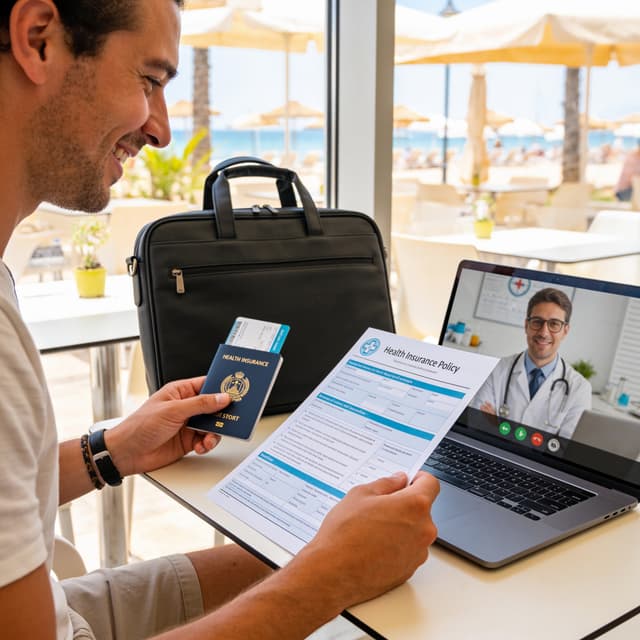
Online Doctor for a Sinus Infection (Sinusitis) in Spain: What Helps and When to Be Seen

Medically Reviewed by Dr. Pedro Yelamo Vera, MD
Licensed Physician No. 484814280 · Official Medical College of Bizkaia (Spain)Last reviewed: 21 October 2026
Sinusitis rarely waits for a convenient moment, and figuring out the Spanish healthcare system while your head is throbbing is nobody's idea of a good trip. Here is how an online consultation works, what an online doctor can and cannot do, and when you actually need to be seen in person.

You don't have to figure this out alone
Dr. Pedro Yelamo Vera is an independent, bilingual GP licensed in Spain. Book a 15-minute video consultation in English or Spanish for €50, with a private electronic prescription issued under Spanish law when clinically appropriate.
A sinus infection (sinusitis) causes a blocked nose, pressure or pain in your face, and thick mucus. Most cases are caused by a virus and get better on their own, usually within 2 to 3 weeks. Antibiotics do not help viral infections.
An online doctor can check your symptoms by video and explain which pharmacy products may help. The doctor can also tell you when you need to be seen in person.
This guide is for expats and travellers in Spain who want that help in English. It explains what an online consultation can and cannot do for sinusitis. It also lists the red flags that mean you need in-person or emergency care instead.
- An online consultation can assess sinus pain, pressure and nasal congestion. The doctor can explain which saline sprays, decongestants and pain medicines from Spanish pharmacies may suit you.
- Most sinus infections are caused by viruses and get better on their own, usually within 2 to 3 weeks. Antibiotics are only prescribed when a bacterial infection is clinically indicated after a proper assessment.
- Some signs need urgent in-person care, not a video call. These include swelling around one eye, changes in vision, a high fever that will not settle or a severe, unusual headache.
- The public system (SNS) is excellent, but non-emergency appointments can take days to arrange. An online consultation can be a sensible first step for uncomplicated symptoms.
- In an emergency in Spain, call 112.
Why Sinus Problems Are So Common When You Travel
Acute sinusitis means the lining of your sinuses is swollen and inflamed. It usually follows a cold, and it is very common. Travel can make it feel worse. Dry cabin air, air conditioning, dust and new allergens can all irritate your nose and sinuses.
Typical sinus infection symptoms include:
- A blocked or runny nose (nasal congestion).
- Pain, pressure or tenderness in the face, around the eyes, cheeks or forehead.
- Thick mucus, which may drip down the back of your throat.
- Headache, sore throat, cough or bad breath.
- Sometimes a fever.
Most cases get better without treatment. But the pressure, the headache and the poor sleep can be miserable. Many people want help sooner than they would at home. This is especially true when they do not know which Spanish products match the ones they use back home.
Sinus Infection Treatment at Home
Most people get better with simple self-care. The NHS suggests:
- Getting plenty of rest.
- Drinking plenty of fluids.
- Pain relief such as paracetamol or ibuprofen, if suitable for you. Do not give aspirin to children under 16.
- Cleaning your nose with a salt water spray or rinse.
- Avoiding things that trigger your allergies, and not smoking.
Stay at home and limit contact with others if you have a high temperature or cannot manage your normal day. See a doctor if pain relief does not help, your symptoms get worse, or you keep getting sinusitis.
Who This Guide Is For
- English-speaking residents, digital nomads and tourists in Spain with sinus pain, pressure or a blocked nose.
- People who want a clear, judgment-free assessment without hunting for an English-speaking GP.
- Anyone who is not sure whether they need antibiotics, a pharmacy product or an in-person visit.
What an Online Doctor Can Help With
An assessment of your symptoms
In a video consultation, the doctor asks about your symptoms. Where is the pain? What colour is the mucus? How long has it lasted? Do you have a fever, or have you had sinus problems before?
This helps tell a routine viral sinus infection from one that needs a closer look. Examples are a bacterial infection, or face pain that comes from a tooth.
Advice on sinus infection treatment from the pharmacy
Spanish pharmacies (farmacias) sell saline sprays, decongestant nasal sprays and some pain medicines without a prescription. But brand names differ from those in the UK, the US and elsewhere. The doctor can tell you which active ingredient to look for, such as oxymetazoline or xylometazoline in a decongestant spray. You will also learn how to use it safely.
Whether you need antibiotics
Most sinus infections are viral, and antibiotics do not help them. Sometimes your symptoms, how long they have lasted and how severe they are point to a bacterial infection. Then the doctor assesses whether you need a prescription.
Any prescription remains subject to an individual medical assessment and only if clinically indicated. Sinus symptoms alone, without a proper evaluation, are never a reason for antibiotics.
If one is needed, it is a private electronic prescription under Spanish law, which can be dispensed at pharmacies in Spain.
A medical note, if the assessment supports it
If sinus pain is affecting your work, your travel or a booked activity, the doctor can consider a medical certificate. It is only issued if the assessment supports it. A private note is not the same as an official Spanish sick-leave note (baja médica). Our guide to sick notes in Spain: justificante vs baja explains the difference.
Blocked up and want a clear plan?
A 15-minute video consultation in English (€50) can assess your symptoms and give you the right next step, without a wasted trip to a clinic. Consultations are for urgent, non-emergency care and run every day, 07:30–20:30 (Spain time). You can also read more about sinus infection treatment online.
When Sinusitis Needs More Than a Video Call
Book an in-person visit or get urgent care, instead of a routine online consultation, if you notice any of these:
- Swelling, redness or pain around one eye, or any change in your vision, such as double vision.
- A high fever that does not improve after a few days, or a fever that comes back after you started to feel better.
- A severe headache unlike your usual headaches, a stiff neck or confusion.
- Symptoms that last more than 10 days without any improvement, or that improve and then get much worse again.
- Repeated sinus infections, which may need a scan or a referral to an ear, nose and throat (ENT) specialist.
Very rarely, a sinus infection spreads to the area around the eye, to the bone or to the lining of the brain (meningitis). These complications can be life-threatening. None of the signs above should wait for an online appointment. In an emergency in Spain, call 112.
The Main Options People Use
An online consultation
Best for simple sinus symptoms with no red flags. You get a medical opinion and clear pharmacy advice, plus a medical note if the assessment supports it. The fee is fixed and you stay in your hotel or flat. Consultations run every day, 07:30–20:30 (Spain time). Verdict: a good first step for most travellers and expats.
The public system (SNS)
Spain's public healthcare system gives excellent care. But non-emergency appointments for visitors or new residents can take days to arrange. Whether staff speak English depends on the region and the health centre. Verdict: fine if you are registered and the problem can wait a few days.
Guessing at the pharmacy counter
Pharmacists in Spain are highly trained and genuinely helpful. But without a medical assessment you may choose the wrong product. You might miss a bacterial infection, or use a decongestant spray for too long, which can cause rebound congestion. Verdict: fine for very mild, short-lived symptoms; risky for anything more than a day or two.
Waiting it out with no plan
Most viral sinusitis does clear up on its own. But "wait and hope" with no plan can mean missing warning signs. It can also make your discomfort last longer than it needs to during a trip or a busy week. Verdict: not ideal if you can get an assessment instead.
| Path | Best for | Typical wait | Verdict |
|---|---|---|---|
| Online video consultation | Simple sinus symptoms, no red flags | A booked slot, any day 07:30–20:30, from anywhere in Spain | Good first step |
| Public system (SNS) | Residents with time and an assigned GP | Days, varies by region | Fine if not urgent |
| Pharmacy self-treatment | Very mild, brief symptoms | Immediate, but no medical assessment | Fine short-term only |
| In-person or urgent care | Red flags (swelling around the eye, high fever, severe headache) | Same day, in person | Needed for red flags |
What to Avoid
- Using a decongestant nasal spray for more than a few days in a row. Longer use can cause rebound congestion (rhinitis medicamentosa), which can be harder to treat than the sinusitis. The Spanish leaflets for these sprays say to see a doctor if you are no better after 3 days.
- Assuming all face pain is "just sinuses". Tooth infections and, rarely, more serious problems can feel like sinus pain. A proper assessment sorts this out.
- Asking for antibiotics because you feel unwell. Antibiotics only help bacterial infections. They are only appropriate when clinically indicated after a proper assessment.
- Doubling up on pain medicine. Many cold and flu products already contain paracetamol or ibuprofen. Check the labels so you do not take the same medicine twice.
- Ignoring a fever that keeps rising or comes back after you improve. This is one of the clearest signs that you need more care.
FAQ
Can an online doctor treat sinusitis in Spain?
Yes, for uncomplicated cases. An online doctor can assess your symptoms, advise on pharmacy treatment and decide whether a prescription is clinically indicated, all without an in-person visit.
What is the best decongestant for fast relief of a blocked nose in Spain?
There is no single best product. The right choice depends on your symptoms and your health. These are the main options in Spanish pharmacies:
- Saline sprays and nasal rinses. Salt water helps clear mucus from your nose. They are gentle and suit most people, so they are a good first step.
- Decongestant nasal sprays. Sprays with oxymetazoline or xylometazoline work quickly and need no prescription. Use them for a few days only, as longer use can cause rebound congestion. Check with a pharmacist if you have high blood pressure, heart disease, diabetes, an overactive thyroid or an enlarged prostate. Ask before using them for a child.
- Oral decongestants. Many cold and flu tablets and sachets in Spain contain pseudoephedrine, often mixed with paracetamol, ibuprofen or an antihistamine. Most are sold without a prescription, but some need one. They are not safe for everyone.
Do not take pseudoephedrine products if you:
- Have very high or uncontrolled blood pressure.
- Have heart or blood vessel disease.
- Have severe kidney disease.
- Have narrow-angle glaucoma or an overactive thyroid.
- Have trouble passing urine.
- Have taken an MAOI antidepressant in the last 2 weeks.
Many are also not for use in pregnancy, while breastfeeding or in children under 12. Stop taking them and get medical help at once if you notice warning signs. These include a sudden, severe headache, nausea or vomiting, confusion, a seizure or changes in your vision.
Ask the pharmacist to check any product against your health conditions and your other medicines. If you are still not sure, an online doctor can help you choose.
Can I get a doctor's note online in Spain without an appointment?
No. A doctor's note needs a booked video consultation, so the doctor can assess you first. Consultations run every day, 07:30–20:30 (Spain time).
A note is only issued if the assessment supports it. It cannot confirm days or symptoms the doctor did not assess, and it is not an official Spanish sick-leave note (baja médica). See medical certificates for what can be documented after a video consultation.
Will I automatically get antibiotics for sinusitis?
No. Antibiotics are only prescribed when a bacterial infection is clinically indicated after a proper assessment. Most sinusitis is viral and clears up without them.
How long does sinusitis usually last?
Acute sinusitis usually lasts about 2 to 3 weeks, and many people feel better sooner. See a doctor if your symptoms last more than 10 days without getting better, or if they improve and then get worse again.
Is sinusitis a medical emergency?
Usually not. But swelling around the eye, changes in vision, a high fever that will not settle or a severe, unusual headache need urgent in-person care. In an emergency in Spain, call 112.
Your Next Step
Sinusitis is uncomfortable and common, but it is usually manageable without ruining your trip or your week. You just need a clear plan and someone who can explain, in plain English, what is going on.
An online consultation gives you that assessment, without guessing at a pharmacy counter or waiting on a system you do not know yet. Book a video consultation for urgent, non-emergency care.
This content is educational and not a substitute for medical advice. For emergencies in Spain, call 112.
Medical Citations & Sources
This content is written and reviewed by a licensed physician with reference to the following official health authorities.