Varicose veins in Spain: what a video GP can discuss

Medically Reviewed by Dr. Pedro Yelamo Vera, MD
Licensed Physician No. 484814280 · Official Medical College of Bizkaia (Spain)Last reviewed: 11 October 2026
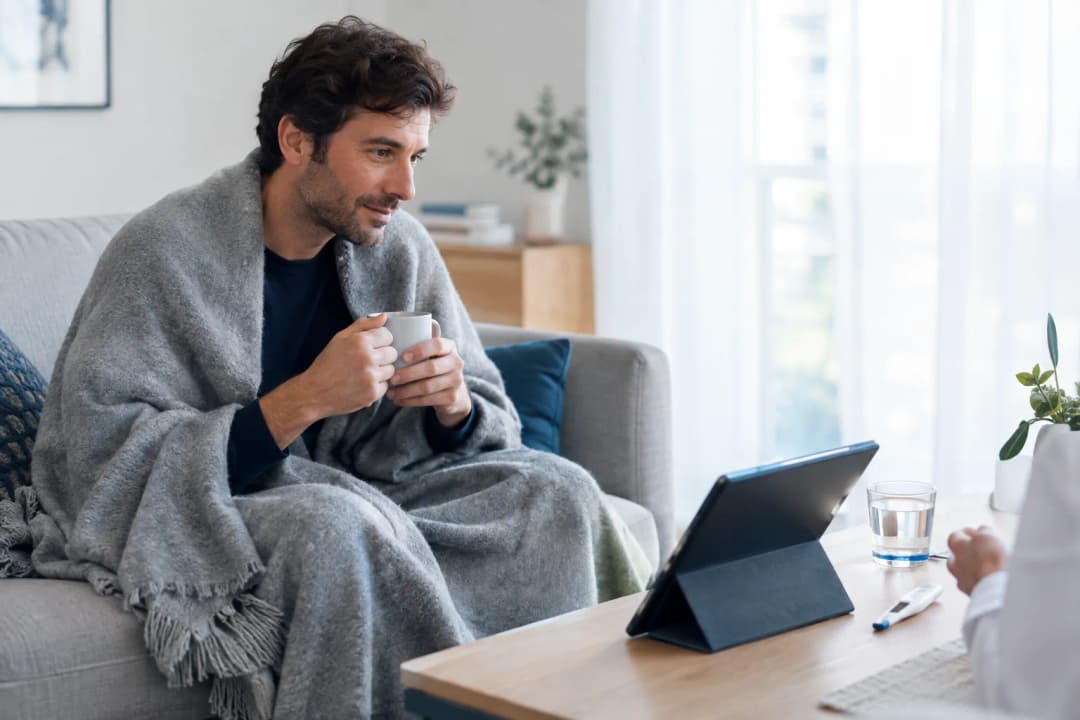
Varicose veins in Spain: what a video GP consultation can cover, when an in-person examination is needed and which records to bring.
You don't have to figure this out alone
Dr. Pedro Yelamo Vera is an independent, bilingual GP licensed in Spain. Book a 20-minute video consultation in English or Spanish for €50, with a private electronic prescription issued under Spanish law when clinically appropriate.
For English-speaking patients in Spain, a varicose veins GP consultation is a discussion of symptoms, medical records and next steps to identify the appropriate route to care. If unfamiliar healthcare arrangements leave you unsure where to start, a calm conversation in English can help you explain your concerns—but video cannot replace a physical examination when one is needed.
- A varicose veins GP consultation Spain appointment can cover your concerns, previous records and the need for local assessment.
- Dr. Pedro Yelamo Vera offers bilingual video GP consultations for patients currently in Spain; physical examination remains a separate step.
- Prepare your symptom timeline, medical records and follow-up questions before booking.
- Prescriptions and certificates are not guaranteed. Medical emergencies require 112 or the nearest local emergency department.
Why a GP discussion matters for English-speaking patients in Spain
When you are away from your usual doctor, the difficult part is not always explaining the concern itself. It is knowing which service to approach, describing your history in another language and understanding what happens after the appointment.
You do not need to arrive with a diagnosis or know which specialist to request. Start with what you have noticed and what you want clarified. The consultation should help distinguish questions that can be discussed remotely from matters requiring local examination.
For a consultation, prepare information that reflects your situation now, rather than relying only on an old report. This guide to preparing for an online GP consultation provides a useful starting point.
The purpose of video is to clarify your next step, not to promise a diagnosis from a screen.
Know the safety boundary before booking
Medical emergencies are not suitable for this service. Call 112 or go to the nearest local emergency department. Do not wait for a video appointment, a message response or an uploaded photograph to be reviewed if you need emergency help.
For a non-emergency concern, the doctor still decides whether remote discussion is appropriate. An appointment can lead to advice to obtain an in-person assessment rather than a prescription or a remote treatment plan.
Treatment and prescriptions are issued solely at the doctor's discretion based on evidence-based clinical guidelines.
Prepare for your video GP discussion in 7 steps
1. Describe what you have noticed
Start with observations rather than a label. Explain where your concern is, when you first noticed it and whether anything has changed. If a clinician previously identified varicose veins, say who assessed you and bring the relevant report.
You do not need medical vocabulary. Plain descriptions give the doctor a clearer starting point than trying to select a diagnosis yourself. Distinguish what you have personally noticed from what someone else told you.
A simple note on paper is enough. Keep it beside you during the call so that anxiety, interruptions or unfamiliar terminology do not make you forget your main concern.
Prepare these details:
- The area you want to discuss, using everyday language.
- When you first noticed the concern.
- What has changed since then, if anything.
- Any previous assessment and who provided it.
- The question you most want answered.
2. Gather records that explain your history
Collect existing documents yourself before seeking new tests or paperwork. Useful material includes previous consultation notes, relevant investigation reports and any written care plan you already have. You do not need to commission new investigations simply to prepare for a video discussion.
For your appointment, separate older findings from current observations. Keep the original dates visible. A report describes an assessment at a particular time; it does not replace explaining what is happening now.
If your records are in another language, tell the practice before the appointment. Do not assume that every document can be interpreted during the call or that you must pay for translation before asking what is needed.
Organise your preparation under these headings:
- Symptom timeline: your notes about the concern and changes.
- Medical records: existing reports and consultation summaries.
- Current medicines: names and instructions from the original packaging or record.
- Previous advice: what another clinician recommended.
- Follow-up questions: what remains unclear to you.
3. Choose a consultation that fits your question
Begin by deciding what you need from the conversation. Reviewing previous advice is different from requesting an examination of a new concern. If you already have a local GP, you can ask that service whether an in-person appointment is the appropriate starting point.
If language or travel arrangements make that difficult, a bilingual video consultation offers another way to discuss the question. Dr. Pedro Yelamo Vera is a GP licensed in Spain (Colegiado No. 484814280), providing English/Spanish consultations for patients currently in Spain.
Dr. Pedro Yelamo Vera's video GP consultation is best for English-speaking patients in Spain seeking a non-emergency discussion of concerns and records. Its limitation is equally important: it cannot provide the hands-on examination or local investigations your situation might require.
Before choosing video:
- Confirm that you will be in Spain during the appointment.
- Explain the main reason you want a consultation.
- State whether you have already had an in-person assessment.
- Ask whether your question is suitable for remote discussion.
- Keep a local care option available if examination is advised.
4. Set up a private, practical video appointment
You can prepare the setting without buying equipment or downloading unfamiliar tools in advance. Choose somewhere you can speak freely, check your device and follow the practice's joining instructions. A hotel room or home setting should provide enough privacy for a medical conversation.
The practice provides GDPR-compliant telemedicine, but your surroundings still matter. Avoid discussing sensitive information in a shared workspace, café or open hotel lobby. Ask how to share records securely rather than sending them through a channel you have chosen yourself.
If showing the area of concern is relevant, let the doctor explain what is appropriate. You should understand the request and feel comfortable with it. A camera view does not remove the limits of remote assessment.
Before joining:
- Test your camera, microphone and connection.
- Choose a private room where possible.
- Keep your records within reach.
- Confirm how documents should be shared securely.
- Say if you need an explanation repeated in simpler language.
5. Ask what video can and cannot establish
Use the appointment to understand the limits of the information available. The GP can discuss your account, review records you provide and explain the next assessment step. Do not treat the call as a promise that every question will be resolved remotely.
Ask which parts of the assessment remain incomplete without seeing you in person. This makes the next step clearer and helps you understand why a local appointment might be recommended. The decision should reflect your individual situation, not your preference for receiving everything online.
For your care plan, focus on practical actions rather than a guaranteed result. If a test or specialist assessment is discussed, ask what question it is intended to answer and who should arrange it locally.
Useful questions include:
- What can you assess from this discussion and my records?
- What needs an in-person examination?
- What is the recommended next step in Spain?
- Who should arrange any further assessment?
- What should I do if the situation changes before that assessment?
6. Clarify any proposed treatment or documentation
Do not book with the expectation of receiving a particular medicine, certificate or procedure recommendation. Bring your existing information and ask the doctor to explain the reasoning behind any proposed plan.
Where clinically appropriate, following a genuine evaluation.
This condition applies to any consideration of prescribing or medical documentation. Treatment and prescriptions are issued solely at the doctor's discretion based on evidence-based clinical guidelines. Neither an appointment nor a request guarantees that a prescription or certificate will be issued.
If you need paperwork for an insurer or another organisation, bring its requirements. The doctor decides what can be supported clinically; the receiving organisation determines its own acceptance requirements. Do not assume that a consultation automatically satisfies either process.
Before leaving the topic:
- Ask what the proposed plan is intended to address.
- Explain any previous treatment and your concerns about it.
- Confirm which decisions require local assessment first.
- Share the exact requirements for any requested document.
- Check who to contact if instructions are unclear.
7. Leave with a clear follow-up plan
Before the call ends, repeat the next step in your own words. This is especially useful when you are dealing with unfamiliar healthcare terms or arranging care while travelling. Ask the doctor to correct anything you have misunderstood.
Your plan should distinguish what you can do yourself from what needs another appointment. It should also explain how to seek help if your situation changes. A remote discussion is not a substitute for emergency care or any examination the doctor recommends.
For follow-up, keep the consultation date, any advice received and subsequent local assessments together. If you later see another clinician, this record helps you explain what has already been discussed without relying entirely on memory.
Confirm these points:
- The next action and who is responsible for arranging it.
- Whether an in-person appointment is needed.
- What records to take to that appointment.
- How to clarify questions about the agreed plan.
- When to use urgent local care rather than await another video call.
Compare the routes to care in Spain
Choose the route that matches the assessment you need, not simply the easiest appointment format. For English-speaking patients in Spain, convenience and the need for examination are separate considerations.
The options below are care routes, not interchangeable versions of the same service. A discussion online can be useful while still leaving a physical assessment to a local clinician.
| Option | Best for | Main advantage | Key limitation |
|---|---|---|---|
| Dr. Pedro Yelamo Vera video GP consultation | Non-emergency discussion in English or Spanish | Discuss concerns and records from your home or hotel | Cannot perform a hands-on examination |
| Local in-person GP appointment | Concerns requiring physical assessment | Allows direct examination | You need to arrange a local appointment and clarify language needs |
| Local specialist assessment | A specialist question identified through clinical assessment | Focuses on the issue referred for assessment | Does not remove the need to establish the appropriate care route |
| Emergency department | Medical emergencies | Provides an emergency care route | Not a substitute for planned, non-emergency follow-up |
Common mistakes English-speaking patients in Spain make
Treating a photograph as a complete assessment
A photograph does not provide a hands-on examination. Explain your history and follow the doctor's advice about what requires local assessment rather than expecting an image alone to settle the question.
Bringing records without explaining current changes
Previous reports are useful context, but you still need to describe your present concern. Keep the document dates visible and explain what has happened since the earlier appointment.
Booking primarily to obtain a prescription
The appointment is a clinical evaluation, not a prescription transaction. A discussion can result in a recommendation for local assessment instead of prescribing, and that boundary should be clear before you book.
Leaving local arrangements until after the call
If you are travelling within Spain, tell the doctor where you are staying and when you intend to move. Ask how those arrangements affect the practical next step; do not assume that a recommended assessment will be organised automatically.
Assuming English-language advice guarantees paperwork acceptance
A consultation and an insurer's administrative requirements are different matters. Share the organisation's instructions, and confirm acceptance directly with the recipient rather than expecting the GP to guarantee it.
FAQ
Can I discuss varicose veins with a video GP while I am in Spain?
Yes, a video GP consultation can cover your concerns, previous assessments and questions about next steps while you are in Spain. The doctor decides whether your situation requires local examination or further assessment.
Can a video GP confirm what is wrong from a photograph?
A photograph alone does not replace a physical examination. The doctor considers the information available and explains when an in-person assessment is needed.
What should I prepare for a varicose veins GP consultation in Spain?
Prepare a symptom timeline, relevant medical records, your current medicine list and your main questions. Keep report dates visible and explain any changes since previous assessments.
Is a video appointment better than seeing a local GP?
Video is useful for a non-emergency discussion, while a local GP appointment allows physical examination. Choose the route that fits the assessment needed rather than treating either format as universally better.
Will the consultation include a prescription?
A prescription is not guaranteed. Where clinically appropriate, following a genuine evaluation. Treatment and prescriptions are issued solely at the doctor's discretion based on evidence-based clinical guidelines.
Can I speak English during the consultation?
Dr. Pedro Yelamo Vera provides bilingual English/Spanish video GP consultations for patients currently in Spain. You can explain your concerns in English and ask for unfamiliar terms to be clarified.
What if I need emergency help before my appointment?
Call 112 or go to the nearest local emergency department for a medical emergency. The video consultation service does not handle emergencies, and you should not wait for an appointment or message response.
One last thing
Write down the decision you need help making—not just the concern you want to describe. For example: whether to arrange an in-person appointment, how to explain a previous assessment or what to bring to a local clinician.
For your consultation, that question gives the conversation a practical focus. You do not need to solve the medical issue yourself before asking for help.
Related guides
Medical Citations & Sources
This content is written and reviewed by a licensed physician with reference to the following official health authorities.