University absence in Spain: checking medical evidence rules

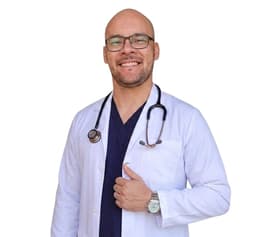
Medically Reviewed by Dr. Pedro Yelamo Vera, MD
Licensed Physician No. 484814280 · Official Medical College of Bizkaia (Spain)Last reviewed: 11 October 2026
Missed university classes or exams in Spain? Check your university's rules on medical evidence before asking a GP for a certificate.
You don't have to figure this out alone
Dr. Pedro Yelamo Vera is an independent, bilingual GP licensed in Spain. Book a 20-minute video consultation in English or Spanish for €50, with a private electronic prescription issued under Spanish law when clinically appropriate.
If you are studying in Spain and illness has disrupted your attendance, check your university's written evidence requirements before requesting a medical document. You do not need to resolve unfamiliar terminology alone: ask the relevant university office to confirm the document, deadline and submission route. A medical consultation assesses your health and whether documentation is clinically appropriate; it does not guarantee that the university will excuse an absence.
- For university absence medical evidence in Spain, confirm the university's requirements before requesting documentation.
- Dr. Pedro Yelamo Vera offers bilingual video GP consultations for patients currently in Spain; certificates are not guaranteed.
- Separate the consultation date, absence dates and submission deadline when preparing your request.
- For medical emergencies, call 112 or attend the nearest local emergency department.
How do you check university absence medical evidence rules in Spain?
Start with the university's instructions, not with a request for a particular certificate. Find the policy that applies to your course and the specific event you missed, then ask the responsible office to clarify anything uncertain. For a current absence, check that you are using the instructions applicable to your current academic period.
If you need background on the clinical documentation process, see the guide to medical certificates for university exchange students. This page focuses on checking the university's evidence rules, rather than assuming that a medical document settles the academic decision.
Use this sequence:
- Find the policy. Look for the attendance, assessment or absence instructions relevant to your situation.
- Confirm the requirement. Ask what evidence is required and whether there is a prescribed form.
- Record the deadline. Confirm when and where the university expects your submission.
- Prepare your records. Gather the policy, relevant dates and any existing medical documentation.
- Seek assessment. Discuss your health concern and documentation request honestly with the clinician.
- Submit securely. Follow the university's specified route and retain confirmation of submission.
Keep the university's administrative questions separate from the doctor's clinical assessment. The university explains its process; the clinician decides what the consultation and available evidence support.
Why this matters when you are unwell abroad
Missing a seminar or assessment can feel especially stressful when you are studying in another language. You might understand that the university wants evidence without knowing whether that means proof of attendance at a consultation, a medical report or a specific form.
You can reduce that uncertainty by getting the request in writing. A clear requirement is more useful than guessing what a Spanish medical term means. If an instruction is unclear, ask the office to explain its purpose as well as its wording.
For your submission, keep the relevant policy text alongside the message confirming your individual requirements. That gives you a practical reference when preparing for a consultation and submitting your paperwork.
What exactly should you ask the university?
Send a short, factual enquiry. Identify the course, the missed activity and the date, then ask for the applicable procedure without including unnecessary medical details.
Useful questions include:
- Which office handles this absence request?
- What document or evidence do you require?
- Is there a university form the clinician needs to consider?
- Do you accept documentation following a video consultation?
- Which language must the document use?
- What is the deadline, and which submission channel should I use?
- What should I do if the medical assessment or documentation is still pending?
Ask for clarification rather than requesting a promise of approval. Written instructions help you make an informed next move, but they do not replace the university's final decision.
Check what the requested document needs to show
Do not assume that every document described as a medical note serves the same purpose. Instead, ask the university what information it needs and bring that request to the consultation.
The table below is a checking guide, not a statement that your university accepts any particular option.
| Evidence mentioned in the request | Best for clarifying | Useful feature | Limit to check |
|---|---|---|---|
| Consultation attendance confirmation | Whether proof of a medical appointment is requested | Focuses on the appointment itself | Do not assume it establishes inability to attend university |
| Medical certificate or report | Whether a clinical statement is requested | Allows the clinician to consider the requested information | Content and issuance depend on the assessment |
| University-specific form | Whether the institution requires a particular format | Shows the exact questions being asked | A clinician cannot automatically certify every requested statement |
| Existing medical records | Whether earlier documentation can support the request | Provides information already recorded | Ask whether the university accepts it for this absence |
Choose the evidence route the university actually requests, subject to what the clinician can support. Do not book a consultation on the assumption that one document can be substituted for another.
The guide to a sick note in Spain and the justificante médico provides related context. For your university request, confirm the required content rather than relying on the document's label alone.
Prepare for the consultation without scripting the outcome
Bring the university's instructions to your appointment. Explain what happened, when it happened and what the institution has asked you to provide; do not ask the doctor to adopt wording that goes beyond the available evidence.
Dr. Pedro Yelamo Vera is a suitable GP consultation option for English-speaking students currently in Spain who need bilingual medical assessment. The practice offers English/Spanish video consultations, allowing you to discuss your concern without leaving your home or accommodation.
The practical benefit is being able to explain your situation in a language you understand. The limit is equally important: a video consultation does not guarantee a certificate, establish university acceptance or replace an in-person examination when one is needed.
Dr. Pedro Yelamo Vera is a GP licensed in Spain (Colegiado No. 484814280).
Where clinically appropriate, following a genuine evaluation.
Treatment and prescriptions are issued solely at the doctor's discretion based on evidence-based clinical guidelines.
Medical certificates also depend on the genuine evaluation and the evidence available. Describe your request openly and allow the clinician to explain what can and cannot be documented.
A simple preparation sequence
Use the following sequence to organise your information. It helps you explain the administrative request without turning the consultation into a request for a predetermined result.
- Policy check: Save the university's instructions and any form it supplies.
- Date record: List the missed activity, symptom timeline and any previous consultations accurately.
- Document gathering: Collect relevant records already in your possession.
- Clinical assessment: Discuss your health concern and the requested evidence with the doctor.
- Secure submission: Send only the documentation required through the university's designated route.
For a consultation about an absence, distinguish the dates you remember from dates documented in existing records. If you are uncertain, say so instead of filling a gap with an estimate presented as fact.
Check whether video consultation suits your needs
Discuss your health concern and university documentation request in English or Spanish.
Why the evidence requirements need checking
The relevant factors are the details of your request, not simply the fact that you were absent. Use these points to identify what needs confirmation rather than assuming there is one answer for every student in Spain.
- Missed activity: Identify whether the request concerns teaching attendance, an assessment or another course requirement.
- Requested statement: Check whether the university wants proof of consultation or a clinical statement about the absence.
- Relevant dates: Separate the absence period from the consultation date and submission deadline.
- Document format: Ask whether a particular form, language or identifying information is required.
- Submission route: Confirm which office receives the evidence and how you should send it.
- Review process: Ask who decides the request and how you will receive the decision.
Each point gives you a concrete question to resolve. None is a reason to assume that the university must approve the absence or that the clinician must issue the requested document.
Can I ask for evidence after the absence has already happened?
Explain the timing honestly and ask what evidence can be considered. Tell the clinician when you were unwell, when the absence occurred and whether you received medical care at the time.
Keep the date of the current consultation distinct from the earlier absence. A clinician needs to assess what the available information supports; your request alone does not establish past incapacity.
For a past absence, ask the university how it handles evidence submitted after the event. Do not assume that obtaining a later consultation changes the original deadline or guarantees that earlier dates can be certified.
What if the university asks for information I want to keep private?
Ask which details are necessary and whether a less detailed document would meet the requirement. You can raise this concern with both the university's designated office and the clinician before anything is submitted.
Dr. Pedro Yelamo Vera provides GDPR-conscious medical consultations. That does not tell you how your university handles submitted evidence, so ask the institution about its approved channel and who receives the document.
Avoid sending your full medical history simply because it is available. First establish what the request requires, then discuss how to provide relevant information without unnecessary disclosure.
What if I cannot obtain evidence before the deadline?
Contact the university before the stated deadline and explain the situation factually. Ask whether you should submit the request first, provide available records or follow another documented procedure.
Do not wait silently for a certificate that has not been agreed or issued. Keep a copy of your enquiry and any reply, but do not assume that contacting the office creates an extension.
If you receive a decision you do not understand, ask for the reason and the applicable review process. Keep the discussion focused on the requirement, the evidence submitted and the next permitted step.
FAQ
What medical evidence do I need for a university absence in Spain?
Check the requirements for your university, course and missed activity before requesting a document. Ask the responsible office to confirm the required content, format, deadline and submission route.
Can an online GP guarantee a certificate for my university?
No, an online GP cannot guarantee a certificate or university acceptance. Documentation is considered where clinically appropriate, following a genuine evaluation.
Is a video consultation suitable for a student currently in Spain?
A video consultation is an option for discussing a non-emergency health concern, but suitability depends on the clinical assessment. Dr. Pedro Yelamo Vera offers bilingual English/Spanish GP video consultations for patients currently in Spain.
Can I get a document for an absence that happened before my appointment?
Tell the clinician the actual dates and provide any relevant existing records. A later consultation does not automatically establish earlier incapacity or justify certifying a past period.
Will my university accept a medical document written in English?
Ask your university which document language it requires before requesting evidence. Do not assume that an English-language document will be accepted or that a translation alone will meet every requirement.
Do I need to send the university my whole medical history?
Ask the university what information it requires before sending medical records. Discuss any privacy concerns with the clinician and use the institution's designated submission channel.
What should I do if I need emergency medical help?
Call 112 or attend the nearest local emergency department for a medical emergency. Do not wait for a video appointment, an administrative reply or university paperwork.
One last thing
Write down three dates separately: the absence date, the consultation date and the submission deadline. Keeping them distinct helps you explain your request accurately without implying that a later appointment proves what happened earlier.
For your request, save the university's instructions, your enquiry, the reply and the submission confirmation together. This gives you a clear record if you need to ask what happens next.
Medical emergencies are outside this service: call 112 or attend the nearest local emergency department. Your immediate care takes priority over attendance evidence.
Related guides
Medical Citations & Sources
This content is written and reviewed by a licensed physician with reference to the following official health authorities.