Anticoagulation follow-up in Spain: records for a GP discussion

Medically Reviewed by Dr. Pedro Yelamo Vera, MD
Licensed Physician No. 484814280 · Official Medical College of Bizkaia (Spain)Last reviewed: 11 October 2026
Anticoagulation follow-up with a GP in Spain starts with clear records: your medicine list, dated results and the questions you want answered.
You don't have to figure this out alone
Dr. Pedro Yelamo Vera is an independent, bilingual GP licensed in Spain. Book a 20-minute video consultation in English or Spanish for €50, with a private electronic prescription issued under Spanish law when clinically appropriate.
Anticoagulation follow-up in Spain is a GP discussion that brings your existing treatment records together so you can clarify the next steps in your care. Explaining a long medical history in another language can feel stressful, but you do not need a perfect file: this guide shows you what to gather, what to flag as uncertain, and what to ask during a bilingual consultation.
- For anticoagulation follow up gp spain, prepare your treatment letter, current medicine list, dated results, and follow-up questions.
- Dr. Pedro Yelamo Vera offers bilingual GP discussions for patients in Spain; video does not replace required in-person care.
- Bring original records, label missing information, and ask who will arrange and review the next checks.
- For a medical emergency, call 112 or go to the nearest local emergency department.
Why anticoagulation follow-up matters for patients in Spain
When you move to Spain or spend time here, your records can remain scattered across a previous clinic, a hospital portal, and your own inbox. A new GP needs a clear account of what your existing team prescribed and planned. Your task is to make that information readable, not to interpret it yourself.
The broader GP follow-up guide for expats in Spain covers continuity of care. This guide addresses a narrower question: how to prepare anticoagulation records for that discussion.
Dr. Pedro Yelamo Vera's anticoagulation follow-up consultations are best suited to patients in Spain seeking a bilingual GP discussion of existing records and next steps. The practice provides English/Spanish video consultations with a GP licensed in Spain (Colegiado No. 484814280), and GDPR-conscious care. A video discussion does not replace a physical examination, laboratory testing, or specialist assessment when those are required.
Medical emergencies are not suitable for this service. Call 112 or go to the nearest local emergency department; do not wait for a video appointment or an online reply.
Prepare your records for the GP discussion
You can start with documents you already have and request missing copies from the clinician or clinic that holds them. There is no need to buy a tracking tool or create an elaborate medical spreadsheet. The goal is a clear handover, not a polished presentation.
Gather the original treatment plan
Start with the letter or consultation summary explaining why anticoagulation was prescribed. Add the latest follow-up letter and any discharge summary connected with the treatment. Keep the complete documents, including the patient details, dates, and author information.
If you cannot find the original plan, say so. Write down which clinic holds it and whether you have requested a copy. Do not reconstruct a diagnosis or treatment instruction from memory and present it as a confirmed medical record.
For your consultation folder, distinguish historical documents from the current plan. An older letter can still be useful, but the GP needs to know whether another clinician later changed its instructions.
- Save the original treatment letter or discharge summary.
- Include the latest relevant follow-up correspondence.
- Keep all pages of each document together.
- Note the clinic and clinician named on the plan.
- Mark missing documents as requested or unavailable.
Build a current medicine list
Write down what you currently take using the wording on the packaging and prescription. Include the medicine name, strength, prescribed schedule, and any written instructions you received. Keep your own account separate from the formal prescription if the two do not match.
This list is a record for discussion, not a dosing guide. If you are uncertain about an instruction, label it as uncertain and seek clinical advice rather than guessing. Record any supplements or other medicines you use so the GP can decide what needs assessment.
Set aside 5 minutes as an initial preparation slot to collect packaging and locate your latest prescription. This is a practical starting point, not a promised preparation time. The online GP consultation preparation guide covers the general appointment setup.
- Copy medicine details directly from the label or prescription.
- Include other medicines and supplements you currently use.
- Record allergies already documented in your medical records.
- Note discrepancies between your list and written instructions.
- Keep clear photographs of packaging available if needed.
Organise your results and questions
Collect the results your existing clinician used or requested for anticoagulation follow-up. Include the full report rather than a cropped screenshot of one value. Preserve the test date, units, laboratory information, and any clinician comments.
If you already have INR reports, include them alongside the instructions given by your treating team. Their presence does not mean the same tests or schedule apply to everyone. Ask the GP which records are relevant to your particular plan; do not use this article to choose tests or interpret results.
Dr. Pedro Yelamo Vera's anticoagulation follow-up discussions provide a bilingual setting for reviewing what the records say and identifying what still needs clarification. You can explain uncertainty in English rather than trying to turn it into medical Spanish first.
- Sort reports by the date the sample was taken.
- Keep units and laboratory reference information visible.
- Include the clinician's written interpretation when available.
- Mark results that were requested but have not arrived.
- Write down questions about unclear instructions.
Write a short handover summary
Create a 1-page summary that points to the original documents. Keep it factual: why you are seeking a discussion, where your previous care took place, what records you have, and what remains unresolved. The summary should help the GP find information, not replace the source material.
Use dates rather than phrases such as last month. If you do not remember a date, say that it is approximate. A clearly labelled gap is more useful than a confident but inaccurate timeline.
For a current appointment, add the date you last checked the summary. That tells the reader when you assembled it without implying that every underlying record is recent. Keep older letters with their original dates.
- Current plan: identify the latest written instructions you have.
- Medicine list: record current use and any uncertainties.
- Dated results: list the reports included in your folder.
- Open questions: state what you need the GP to clarify.
Confirm how to share the file securely
Before sending medical information, confirm the practice's intended method for receiving it. Do not assume that a public comment, social-media message, or shared accommodation computer is an appropriate place for personal records. Keep a copy of what you submit so you know which documents the clinician has.
The practice offers secure online video consultations, but you should still ask how supporting documents should be provided. GDPR-conscious care does not remove the need to check the destination before sharing sensitive information.
If your records are not in English or Spanish, mention that before the discussion. Keep the original and separate any translation you prepare. Do not silently replace unfamiliar medical terms with your own interpretation.
- Confirm the receiving method before sending records.
- Check that the documents belong to you and are readable.
- Separate original documents from translated summaries.
- Avoid including unrelated records from other people.
- Keep a list of the files you have submitted.
Agree the next step and its owner
During the consultation, explain what you need from the discussion: clarification of an existing plan, review of available records, or guidance on where follow-up should take place in Spain. Be clear about whether you are visiting temporarily or living here. Your location and existing care arrangements belong in the conversation.
Before finishing, ask who will arrange any agreed checks and who will review the results. If another clinician remains responsible for treatment, ask how information should be shared with them. Do not assume that an appointment automatically transfers all ongoing care.
Choose 2 priority questions to ask first, then keep the rest on your list. A useful pair is: what is the next step, and who is responsible for it? For your follow-up notes, record the agreed action and any timing the clinician actually gives you.
- Confirm whether the next step is remote or in person.
- Ask who will arrange any recommended tests or referrals.
- Identify who will review results and communicate advice.
- Request clarification of instructions you do not understand.
- Record the agreed follow-up route and contact details.
Choose the right setting for the discussion
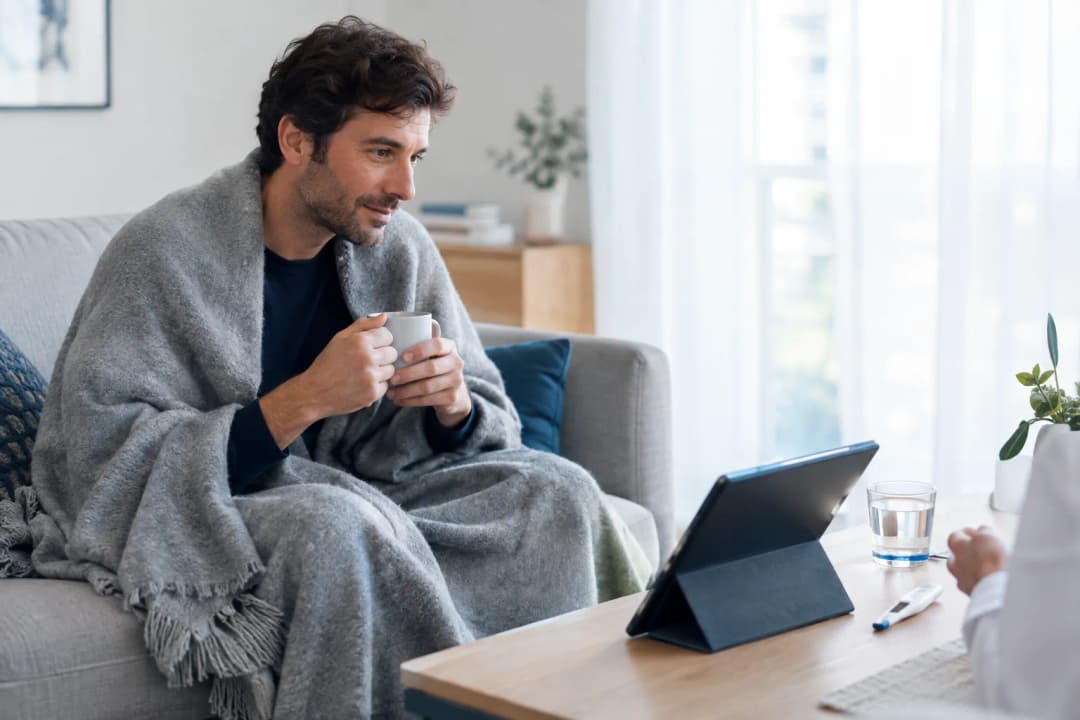
Choose the care setting around the task, not just convenience. Gathering records yourself is useful preparation. A bilingual video GP discussion offers a way to explain those records from your home or accommodation, while local in-person care provides a different setting when examination or testing is needed.
The options below are not interchangeable. An online appointment is not an emergency service, and a specialist letter does not by itself establish a new local follow-up arrangement.
| Option | Best for | Main advantage | Key limitation |
|---|---|---|---|
| Self-prepared record folder | Organising information before an appointment | Keeps source documents and questions together | Does not provide clinical assessment or interpret results |
| Bilingual video GP discussion | Patients in Spain who need to explain existing records in English or Spanish | Allows a medical discussion without leaving home or accommodation | Cannot perform a physical examination or collect samples |
| Local in-person GP appointment | Follow-up that requires face-to-face assessment or local coordination | Provides an in-person setting for assessment | You still need to bring relevant records and explain previous care |
| Existing treating specialist | Questions about the specialist's documented plan | Connects the discussion with the team that created that plan | Does not automatically arrange care near your current location in Spain |
| Local emergency department | A medical emergency | Provides an emergency assessment setting | Is not a substitute for organising routine follow-up |
A consultation with Dr. Pedro Yelamo Vera offers an unhurried English/Spanish discussion, not automatic approval of a requested treatment. Prescriptions or other clinical documents are considered Where clinically appropriate, following a genuine evaluation.
Treatment and prescriptions are issued solely at the doctor's discretion based on evidence-based clinical guidelines. No prescription, certificate, or medical outcome is guaranteed.
Discuss your follow-up records
Explore bilingual video consultations for patients currently in Spain.
Common mistakes patients in Spain make
Treating a summary as the complete record
A phone note saying that treatment is stable leaves out the original instructions and supporting documents. Use your summary as an index, then bring the full letters and reports. If a document is missing, name it rather than filling the gap yourself.
Bringing results without dates or units
A cropped result can leave the GP unable to identify when it was taken or how the laboratory reported it. Save the complete report. Keep any follow-up instructions beside it so the result and the existing plan are not separated.
Assuming a new GP has access to overseas records
Do not assume that records from your previous country will appear automatically during a Spanish consultation. Ask what the practice needs you to provide. Request copies from your previous team and explain which documents are still outstanding.
Booking only to obtain a repeat prescription
A prescription request still requires a genuine clinical evaluation. Bring the current plan and relevant records rather than treating the consultation as an administrative signature. State the practical problem you are facing, but do not expect a guaranteed prescribing decision.
Leaving responsibility for follow-up unclear
A discussion is incomplete if you do not know who will act on the next result or unanswered question. Ask for that responsibility to be made explicit. Keep the agreed plan with your records rather than relying on memory.
FAQ
What should I bring to an anticoagulation follow-up GP discussion in Spain?
Bring your existing treatment plan, current medicine list, complete dated results, and questions about follow-up. Keep original documents alongside any summary, and identify missing information rather than guessing.
Can I discuss my anticoagulation records with an English-speaking GP by video?
Yes, Dr. Pedro Yelamo Vera provides bilingual English/Spanish video consultations for patients currently in Spain. The doctor assesses whether a remote discussion is suitable and whether in-person care or further information is needed.
Do I need to translate every medical record before the appointment?
Ask the practice what it needs before arranging translations. Keep the originals, identify the language of each document, and label any translation separately so it is not mistaken for the source record.
Should everyone bring INR results to an anticoagulation discussion?
Bring INR results if they are part of your existing care records. Do not assume that another patient's tests or monitoring schedule apply to you; ask the clinician which records are relevant to your plan.
Will a video consultation guarantee an anticoagulant prescription?
No, a video consultation does not guarantee a prescription. Where clinically appropriate, following a genuine evaluation. Treatment and prescriptions are issued solely at the doctor's discretion based on evidence-based clinical guidelines.
What if my previous clinic has not sent my records?
Tell the GP which documents are missing and where they are held. Bring the records you do have, keep your account clearly separate from confirmed instructions, and ask the previous clinic for copies.
What should I do if I have a medical emergency in Spain?
Call 112 or go to the nearest local emergency department. Do not wait for a routine video consultation or online response; this practice does not handle medical emergencies.
One last thing
The most useful line in your follow-up notes is often who will review the next result. A folder can contain every report and still leave responsibility unclear. Ask that question before the consultation ends, then write down the answer alongside the agreed next step.
You do not need to explain everything perfectly. You need an honest account, readable records, and a clear opportunity to ask questions in a language you understand.
Related guides
Medical Citations & Sources
This content is written and reviewed by a licensed physician with reference to the following official health authorities.