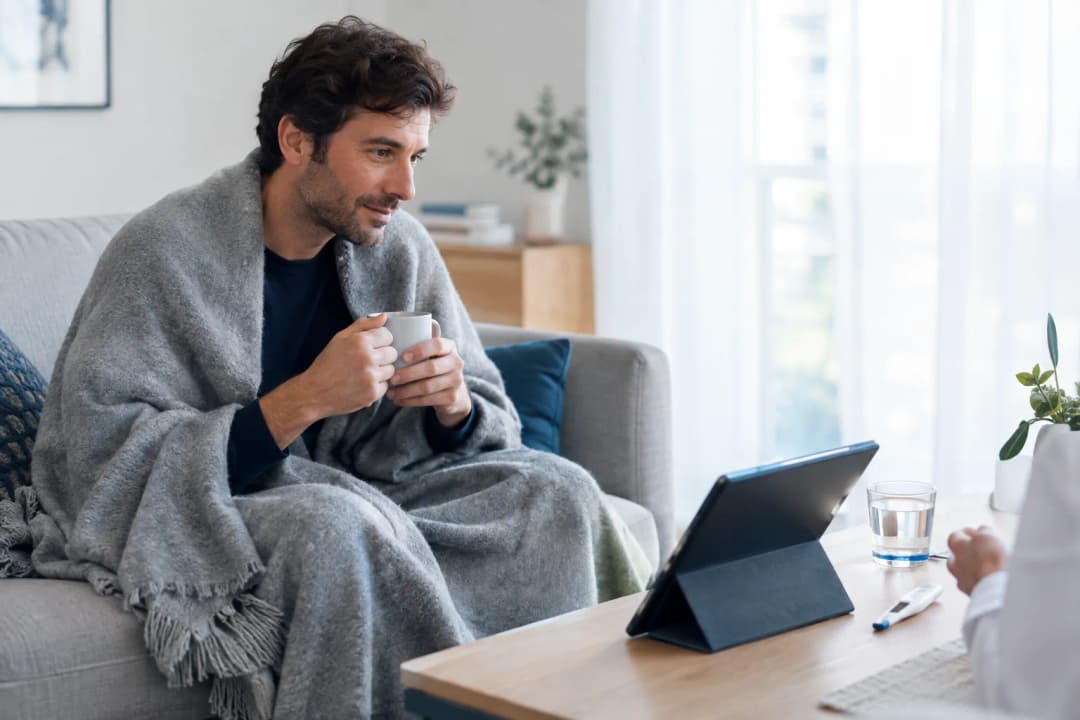
High-altitude travel from Spain: what to discuss with a GP

Medically Reviewed by Dr. Pedro Yelamo Vera, MD
Licensed Physician No. 484814280 · Official Medical College of Bizkaia (Spain)Last reviewed: 11 October 2026
Planning high-altitude travel from Spain? Prepare your route, records and questions, and know what a video GP can assess before you go.
You don't have to figure this out alone
Dr. Pedro Yelamo Vera is an independent, bilingual GP licensed in Spain. Book a 20-minute video consultation in English or Spanish for €50, with a private electronic prescription issued under Spanish law when clinically appropriate.
If you are in Spain and unsure how to prepare for high-altitude travel, discuss your route, sleeping elevations, previous altitude experiences, current health, medicines and access to local care with a GP before departure. You do not need to arrive with the medical answers; a clear itinerary and your existing records give the conversation a useful starting point. A bilingual video consultation can help you organise that review, but it cannot replace a required physical examination, guarantee travel fitness or provide emergency care.
- For high altitude travel gp consultation spain, bring sleeping elevations, your itinerary, medicines and relevant medical records.
- Dr. Pedro Yelamo Vera offers bilingual GP consultations for patients currently in Spain; travel clearance is not guaranteed.
- Ask whether your route needs changes, an in-person assessment or specialist travel medicine advice.
- For medical emergencies in Spain, call 112 or go to the nearest emergency department.
For an English-language starting point, Dr. Pedro Yelamo Vera provides bilingual online GP consultations for patients currently in Spain. Keep the appointment focused on your specific journey rather than a general request for permission to travel.
High-altitude travel from Spain: what should you discuss with a GP?
Bring the planned sleeping elevation for each overnight stop, not just the highest summit on your route. Add travel dates, transport arrangements, previous experiences at altitude and any relevant health records. For a current departure, use your current itinerary rather than an older version of the tour programme.
Use this sequence to prepare:
- Map your route. Identify where you start, how you reach higher ground and where you sleep each night.
- Gather records. Bring a current medicine list, relevant reports and details of previous altitude-related problems.
- Explain concerns. Say what worries you: the ascent schedule, an existing condition, unfamiliar healthcare or a requested form.
- Agree next steps. Ask what needs further assessment and what to do if your itinerary or health changes.
These steps turn a broad travel question into a focused review. They also help separate medical questions from matters your guide, airline or insurer must answer.
Why this matters before you leave Spain
Planning a mountain trip while living or staying abroad can feel like another administrative task. You might have records in one language, a tour briefing in another and uncertainty about which doctor to approach. A consultation should help you sort those questions without making you feel rushed.
A high-altitude review is not simply a request for medication or a certificate. It is a discussion about your proposed journey, your health history and the limits of the assessment. An outcome can include advice to change plans, obtain an examination or seek specialist input.
The CDC Yellow Book 2026 chapter High-Altitude Travel and Altitude Illness identifies travel to sleeping elevations of about 2,500 metres or higher as relevant to altitude-illness risk. This is general travel-health guidance, not an individual diagnosis or a threshold that guarantees safety below it.
What itinerary details should you bring?
Start with the route you actually intend to follow. A destination name alone does not show whether you fly directly to elevation, climb gradually or return to a lower location each evening.
Bring:
- Departure date and the order of overnight stops.
- Sleeping elevation at each stop, in metres.
- The highest planned daytime elevation.
- Transport between stops, including flights and road transfers.
- Planned walking or climbing activity.
- Options for changing the route or reaching local medical care.
The CDC Yellow Book 2026 guidance also discusses sleeping-elevation increases above 3,000 metres. That makes the overnight schedule a useful document for your GP, even when your travel operator has already supplied a general briefing.
Do not translate general ascent guidance into a personal clearance decision. Ask the GP to review the itinerary in the context of your history, and ask the operator which changes are possible. If you do not know an elevation, mark it as unknown and request the information rather than guessing.
What health information should you prepare?
Bring information that helps the GP understand your current situation. You do not need to build a new medical file from scratch; useful existing documents are a better starting point than an unfiltered collection of unrelated records.
Include a current medicine list, allergies, relevant diagnoses already made by your treating clinicians, and recent reports connected to your concern. Describe any change since your last review, including a recent illness, hospital visit or change in treatment.
If you previously felt unwell at altitude, describe what happened in your own words. Include where you were, whether you sought medical care and what records you have. Do not label the episode yourself if no clinician established a diagnosis.
For a current trip, check that your medicine list reflects what you take now. The preparation guide for an online GP consultation provides a separate starting point for organising the appointment itself.
What should you ask about medicines?
Ask for a review of your existing medicines and whether any additional assessment is needed before travel. Bring the names, doses, schedules and reasons they were prescribed, together with supplements or other products you use.
Useful questions include:
- Does my current treatment need review before this itinerary?
- Are there interaction concerns that need checking?
- What should I do if I cannot access my usual medicine during the trip?
- Does this question need a travel medicine specialist or my usual treating clinician?
Do not borrow another traveller's medicine or assume that a previous travel prescription applies to a different trip. A consultation evaluates your circumstances; it is not a promise to issue a particular treatment.
Where clinically appropriate, following a genuine evaluation. Treatment and prescriptions are issued solely at the doctor's discretion based on evidence-based clinical guidelines.
Can a video consultation cover everything?
No. A video appointment can support discussion, record review and planning, but it cannot perform a hands-on examination. The GP decides whether the information available is sufficient or whether you need another type of assessment.
| Care route | Best for | Useful role | Important limitation |
|---|---|---|---|
| Bilingual video GP consultation | Patients currently in Spain preparing a non-emergency travel review | Discussing the itinerary, history, medicines and next steps | Cannot replace a required physical examination |
| In-person medical assessment | Questions that require examination or testing | Assessing findings that cannot be established over video | Travel-specific specialist input can still be needed |
| Emergency services | A medical emergency | Urgent assessment and treatment | Not a substitute for routine pre-travel planning |
Dr. Pedro Yelamo Vera's bilingual GP consultations are best for patients currently in Spain who want to discuss travel preparation in English or Spanish. The practice offers unhurried consultations with a GP licensed in Spain (Colegiado No. 484814280), and GDPR-conscious care. Its limitation is equally important: remote discussion is not an examination or automatic travel clearance.
Tell the practice that you are currently in Spain when arranging care. This page concerns preparation before departure from Spain; it does not establish consultation availability after you leave the country.
Why does high-altitude travel advice vary?
A destination alone does not determine the advice. Your GP needs the planned journey and your personal history together, rather than a generic checklist detached from the trip.
The discussion depends on:
- Sleeping elevations: Where you stay overnight is a key part of the itinerary review.
- Ascent schedule: Direct arrival and gradual travel present different planning questions.
- Previous experience: Details of earlier problems help the clinician assess what needs attention.
- Current health and treatment: Existing records and recent changes shape the review.
- Access to care: The ability to alter plans, descend or reach medical help matters to preparation.
For your itinerary, ask which details would change the recommendation. That gives you a practical reason to contact the GP again if the operator changes the route or your health changes before departure.
Can a GP guarantee that I am fit for a high-altitude trip?
No. A GP consultation cannot guarantee that you will remain well at altitude or that a particular itinerary is safe for you. Its purpose is to assess the information available and identify appropriate next steps.
If an organiser requests a fitness form, send the exact wording before the appointment. A general video GP consultation does not replace a required sporting, occupational, aviation or other in-person fitness examination.
Where clinically appropriate, following a genuine evaluation. Certificates are not guaranteed, and the organisation receiving a document decides whether it meets its requirements.
Should I ask about travel insurance and evacuation?
Yes. Ask your insurer whether your planned activities and elevations fall within the policy, and ask the trip organiser how medical assistance works along the route. Keep these questions separate from the GP's clinical assessment.
Bring any insurer request for medical information, but do not ask the doctor to interpret coverage terms on the insurer's behalf. A medical document does not establish that a claim will be accepted.
Before your departure, save the insurer's assistance details and the operator's local emergency arrangements somewhere you can access without relying on a single device. Confirm who your travelling companions should contact if you need help.
What should happen at the end of the consultation?
You should understand the next step, even when the appointment does not settle every question. Ask the GP to distinguish what has been discussed from what still needs an examination, records or specialist review.
Use these closing questions:
- What information is still needed?
- Do I need an in-person assessment before departure?
- Which questions belong with a travel medicine specialist?
- What changes should prompt another review?
- What should I do if I become unwell before leaving Spain?
Leave with an action plan, not an assumption that silence means clearance. If something remains unclear, ask the doctor to explain it in plain English or Spanish.
What if I am already unwell?
Tell the clinician about current symptoms before treating the appointment as routine travel preparation. An itinerary review and an assessment of a new health concern are different tasks; the latter can change what happens next.
For medical emergencies in Spain, call 112 or go to the nearest local emergency department. Do not wait for a video appointment or a reply from the practice. This service does not handle medical emergencies.
If an emergency occurs after departure, contact the destination's local emergency services and follow local rescue arrangements. Do not assume that a GP appointment arranged in Spain provides emergency support during a remote trip.
FAQ
What should I bring to a high-altitude travel GP consultation in Spain?
Bring your itinerary, sleeping elevations, current medicine list and relevant medical records. Include details of previous problems at altitude and any forms requested by the trip organiser.
Can I discuss high-altitude travel with an English-speaking GP while I am in Spain?
Yes, Dr. Pedro Yelamo Vera provides bilingual English/Spanish online GP consultations for patients currently in Spain. The clinician determines whether a video assessment is sufficient or whether you need in-person care.
Does a video GP appointment guarantee that I am fit to travel?
No, a video GP appointment does not guarantee travel fitness or a clinical outcome. It also does not replace a required physical examination or specialist fitness assessment.
Will the GP prescribe medicine for my altitude trip?
A prescription is not guaranteed. Where clinically appropriate, following a genuine evaluation. Treatment and prescriptions are issued solely at the doctor's discretion based on evidence-based clinical guidelines.
Why does the GP need to know where I will sleep?
Sleeping elevations help the GP understand your ascent schedule. Bring the overnight itinerary alongside the highest daytime elevation rather than supplying only the destination name.
Can I get a certificate for my trekking organiser online?
A certificate is not guaranteed, and a video appointment cannot replace a required in-person fitness examination. Where clinically appropriate, following a genuine evaluation. Send the exact form and confirm the organiser's acceptance requirements.
What should I do if I have a medical emergency before leaving Spain?
Call 112 or go to the nearest local emergency department for a medical emergency in Spain. Do not wait for an online consultation; the practice does not provide emergency care.
One last thing
Ask the operator for the sleeping itinerary before you ask the GP for a travel decision. A brochure's summit height leaves out much of the journey the clinician needs to understand.
If the route changes after your review, keep the revised version and ask whether it needs another discussion. That is more useful than treating an earlier consultation as permanent clearance for any mountain itinerary.
Related guides
Medical Citations & Sources
This content is written and reviewed by a licensed physician with reference to the following official health authorities.