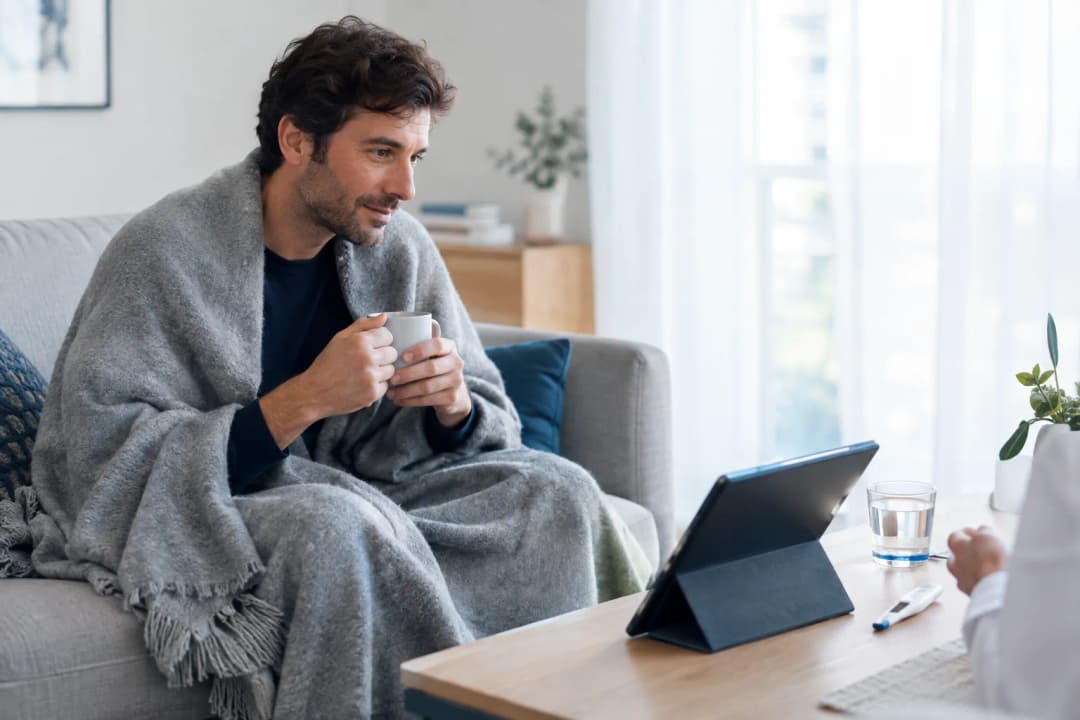
Anxiety or depression in Spain: preparing your follow-up plan

Medically Reviewed by Dr. Pedro Yelamo Vera, MD
Licensed Physician No. 484814280 · Official Medical College of Bizkaia (Spain)Last reviewed: 11 October 2026
Preparing anxiety or depression follow-up in Spain: organise your records, agree the next review and know when video care or local support fits.
You don't have to figure this out alone
Dr. Pedro Yelamo Vera is an independent, bilingual GP licensed in Spain. Book a 20-minute video consultation in English or Spanish for €50, with a private electronic prescription issued under Spanish law when clinically appropriate.
Trying to maintain anxiety or depression follow-up care in Spain can feel difficult when your records, usual clinician, and preferred language are in different places. You do not need to arrive with a perfect medical file: a clear summary and a few practical questions give the consultation a useful starting point. This guide explains how to prepare for a bilingual GP video consultation and leave with an agreed next step, rather than an assumed treatment outcome.
- An anxiety depression follow up care plan Spain consultation should clarify records, review responsibilities, and your next contact.
- Dr. Pedro Yelamo Vera provides bilingual GP video consultations for patients currently in Spain, not emergency care.
- Bring your previous care plan and current medicine details; a consultation does not guarantee a prescription.
- For immediate danger or inability to stay safe, call 112 or attend the nearest emergency department.
Why follow-up planning matters for patients in Spain
Anxiety or depression follow-up planning is the process of organising a review of your existing care, with the aim of making your next steps clear. For English-speaking expats, digital nomads, and tourists in Spain, the practical challenge often includes explaining previous care across languages and keeping records together while away from home.
A previous appointment does not tell a new clinician everything that has happened since. Your follow-up preparation should show what was agreed, what has changed, and which questions remain unanswered. For a review, distinguish current information from older notes rather than treating every document as equally relevant.
Dr. Pedro Yelamo Vera offers English/Spanish online GP consultations for patients in Spain. The practice provides unhurried video consultations and GDPR-compliant telemedicine; he is a GP licensed in Spain (Colegiado No. 484814280).
Dr. Pedro Yelamo Vera is best suited to patients in Spain seeking bilingual GP follow-up planning, not emergency care. Video offers a way to discuss your history from home or your hotel, but it does not replace an examination or specialist assessment when either is required.
Emergency care comes first. If you are in immediate danger, have harmed yourself, or cannot keep yourself safe, call 112 or go to the nearest local emergency department. Do not wait for a video appointment or a message response.
Prepare your follow-up plan
Gather your records
Start with the documents you already have. Ask your previous clinician for the latest consultation summary or care plan, and put the relevant files in a folder you can find during the appointment. You do not need to rewrite your whole medical history.
Create a 1-page summary as a practical preparation aid, not a substitute for the original records. Include the reason for your follow-up, the clinician currently involved, and the questions you want answered. For your appointment, make the date of each previous review easy to see.
You can prepare this yourself using paper or a simple document. The online GP consultation preparation guide provides a separate starting point for the appointment setup.
- Collect your latest care plan and relevant consultation letters.
- Keep original documents alongside any translated summary.
- List current medicines exactly as shown on their packaging or records.
- Note your previous clinician's name and contact details.
- Separate confirmed information from anything you need to check.
Describe current changes
Write a short account of what has changed since your last review. Use ordinary language. Describe your experience rather than trying to decide what diagnosis or treatment it proves.
Concrete examples are easier to discuss than a broad statement such as feeling worse. Explain what you are finding difficult, what remains manageable, and what you want help reviewing. If you cannot remember an exact date, say so rather than supplying one that looks precise.
You can make these notes privately before booking. From this stage, a bilingual consultation with Dr. Pedro Yelamo Vera offers a way to explain the changes in English or Spanish without having to translate your concerns during the conversation. The clinician still needs to assess whether video is an appropriate setting.
- Describe changes in your own words.
- Note when you first noticed each change.
- Explain how your daily activities have been affected.
- Record any concerns about your existing care plan.
- Identify anything you find difficult to discuss aloud.
Prepare your questions
Choose 3 priority questions for the consultation. This is an organisational suggestion, not a clinical rule: you can bring more, but marking the most important ones helps you explain what you need from the appointment.
Useful questions concern responsibility and next steps. Ask what the GP can review, what needs your existing clinician's involvement, and what requires local assessment. If you are visiting Spain temporarily, explain your departure date and where you expect to receive ongoing care.
For a current follow-up, ask whether the documents you brought are sufficient for the decision being considered. A letter from a previous clinician provides context; it does not require a new clinician to repeat the same decision.
- Ask what can be addressed during this appointment.
- Ask whether additional records or local assessment are needed.
- Ask who should oversee ongoing care.
- Ask how your usual clinician should receive relevant updates.
- Ask what to do if your circumstances change before the next review.
Choose your setting
Choose a setting where you can speak privately and hear the clinician clearly. For video, test your connection and arrange access to your documents before the appointment. If you are sharing accommodation, decide how to avoid interruptions without putting pressure on yourself to hide your need for care.
Dr. Pedro Yelamo Vera provides secure bilingual video consultations, but privacy also depends on your surroundings. You can prepare your notes yourself; the consultation provides the clinical conversation, not a replacement for every part of local care.
Tell the clinician if you want a trusted person present. Also explain if you cannot speak freely where you are staying. Do not treat a remote appointment as the only possible route when you need direct local support.
- Find a quiet place where others cannot overhear.
- Check your microphone, camera, and internet connection.
- Keep your current location in Spain available.
- Have your notes and original records within reach.
- Explain who is present and whether you want them involved.
Agree review roles
Ask who is responsible for each next step. A useful follow-up plan distinguishes the GP's role from your existing clinician's role and from any local service you need to contact. It should not leave you guessing who will arrange the next review.
If you already receive specialist care, explain that relationship at the start. Ask whether the appointment is intended to review records, discuss current concerns, or help organise another assessment. Do not assume that a single video consultation transfers responsibility for all ongoing care.
Treatment and prescriptions are issued solely at the doctor's discretion based on evidence-based clinical guidelines. Any decision about a prescription or certificate follows this rule: Where clinically appropriate, following a genuine evaluation. Neither the appointment nor your previous documents guarantee that one will be issued.
- Identify the clinician responsible for ongoing review.
- Clarify which tasks you need to arrange yourself.
- Ask whether another clinician's records are required.
- Confirm whether a local examination or specialist assessment is needed.
- Discuss medicine questions with the responsible prescribing clinician, rather than changing treatment based on this guide.
Confirm next contact
Before the conversation ends, ask what happens next and when. The timing should follow the clinical assessment, not a generic schedule taken from an article. If another appointment is advised, clarify who arranges it and what information you should bring.
Write down 2 contact routes in your plan: the agreed route for routine follow-up and the emergency route. These serve different purposes. A routine message channel must not become your plan for immediate danger.
For your care plan, record the agreed review date or review condition clearly. If no date has been set, ask what action you should take instead. A plan is more useful when it tells you what to do than when it simply says to follow up.
- Record the next appointment or agreed review condition.
- Confirm who is responsible for making contact.
- Ask how to raise a non-emergency question between appointments.
- Clarify what information to gather before the next review.
- Keep 112 and the nearest emergency department separate from routine contact details.
Keep records accessible
After the consultation, put your notes and any documents received in one place. Label them with the actual appointment date and distinguish the clinician's written instructions from your own recollection. Ask for clarification if they differ.
Keep a version you can access while travelling within Spain. You do not need an elaborate tracking system; a dated folder and a short summary can organise the next conversation. Avoid sharing sensitive records through channels the practice has not instructed you to use.
The preparation sequence below summarises the administrative steps. It is not a treatment pathway or a test of whether your care is clinically suitable.
- Save the consultation date and agreed next steps.
- Keep clinician-issued documents separate from personal notes.
- Update your summary when your circumstances change.
- Use the practice's instructed route for sharing records.
- Bring the updated folder to your next review.
Compare follow-up options in Spain
Choose the care setting according to the task and urgency, not convenience alone. A video GP consultation, a local appointment, and specialist follow-up have different roles. None should be treated as a guaranteed route to a particular prescription or outcome.
| Option | Best for | Practical benefit | Key limitation |
|---|---|---|---|
| Bilingual GP video consultation with Dr. Pedro Yelamo Vera | Patients in Spain seeking a GP discussion of existing care and next steps | English/Spanish consultation without leaving home or a hotel | Not emergency care; an examination or specialist assessment can still be required |
| Local in-person GP appointment | Patients whose assessment requires attendance | Provides an in-person care setting | Requires travel and arrangements with the local service |
| Existing mental health clinician | Patients maintaining an established care relationship | Keeps previous assessments and decisions within the discussion | Being abroad does not itself establish clinical availability in Spain |
| Local specialist assessment | Patients advised to obtain specialist review | Addresses the specialist questions identified in the care plan | A GP conversation does not replace the specialist assessment |
| Emergency department or 112 | Anyone in immediate danger or unable to stay safe | Provides the emergency route rather than waiting for routine follow-up | Not a substitute for planned ongoing follow-up |
If you are unsure which routine setting fits, explain your situation before assuming video will cover everything. If there is an emergency, use 112 or the nearest emergency department instead.
Common follow-up mistakes patients in Spain make
Treating an old plan as an automatic renewal
Bring your previous plan as evidence of past care, not as a promise of the next decision. A new clinician needs a genuine evaluation. Ask what records support that evaluation and what remains to be assessed.
Leaving your departure date out of the conversation
A temporary stay and a long-term move create different handover tasks. Tell the clinician when you expect to leave Spain and who you expect to contact afterwards. Do not assume a consultation establishes care outside Spain.
Asking for paperwork before explaining the concern
Explain your clinical concern and follow-up needs first. If you also need a certificate, state its purpose separately. Issuance and acceptance are not guaranteed, and administrative requirements do not determine the clinical decision.
Leaving without knowing who makes contact
A recommendation to arrange another review is incomplete for you until the practical responsibility is clear. Ask whether you should book, request records, or contact another service. Write the answer down before ending the appointment.
FAQ
What should an anxiety or depression follow-up plan in Spain include?
It should record the relevant history, current concerns, review responsibilities, and agreed next contact. Include the clinician's instructions and a separate emergency route rather than relying on a generic review schedule.
Can I discuss my existing care with an English-speaking GP by video?
Yes, Dr. Pedro Yelamo Vera offers English/Spanish GP video consultations for patients currently in Spain. The clinician assesses whether video is suitable and whether local or specialist assessment is needed.
What records should I bring if my previous clinician is abroad?
Bring your latest care plan, relevant consultation letters, and an accurate list of current medicines. Keep original records alongside any summary, and identify information you have not yet confirmed.
Will a follow-up appointment guarantee a prescription?
No, a follow-up appointment does not guarantee a prescription. Treatment and prescriptions are issued solely at the doctor's discretion based on evidence-based clinical guidelines. Where clinically appropriate, following a genuine evaluation.
How soon should my next follow-up happen?
The next review should be agreed with the clinician after assessment. Ask for the date or review condition, who arranges the appointment, and what to do if your circumstances change beforehand.
Can a video GP replace my existing specialist?
Do not assume a video GP consultation replaces your existing specialist. Explain your current care arrangements and ask which clinician is responsible for each part of your follow-up.
What should I do if I cannot keep myself safe?
Call 112 or go to the nearest local emergency department if you cannot keep yourself safe or are in immediate danger. Do not wait for a routine video appointment or message response.
One last thing
Before closing the appointment, read your next steps back in your own words. Ask the clinician to correct anything you have misunderstood. The most useful document is one you can act on: who you contact, what you need to arrange, and when you should do it.
This guide supports preparation, not diagnosis or individual treatment decisions. For medical emergencies, call 112 or attend the nearest local emergency department.
Related guides
Medical Citations & Sources
This content is written and reviewed by a licensed physician with reference to the following official health authorities.